Getting started
I Do Good Things for Free. Should I Accept Money for It?
This is the question most people sit with for a long time before doing anything about it. And the fact that you're asking it — rather than just setting up a donation page without thinking — says something good about you.
By The Pennygood team · May 2026 · 8 min read
This is the question most people sit with for a long time before doing anything about it. And the fact that you're asking it — rather than just setting up a donation page without thinking — says something good about you.
Let's work through it honestly.
The discomfort is real, and it's worth examining
Most people who volunteer or give their time freely feel some version of this: if I start accepting money, does that change what I'm doing? Does it make it less pure? Am I selling something I used to give away?
These are legitimate questions. They deserve a real answer, not a pep talk.
The short version: accepting support from your community is not the same as charging for your services. The distinction matters.
The difference between a price and support
When you charge for something, you set a price, someone pays it, and they receive what they paid for. It's transactional. The exchange is complete.
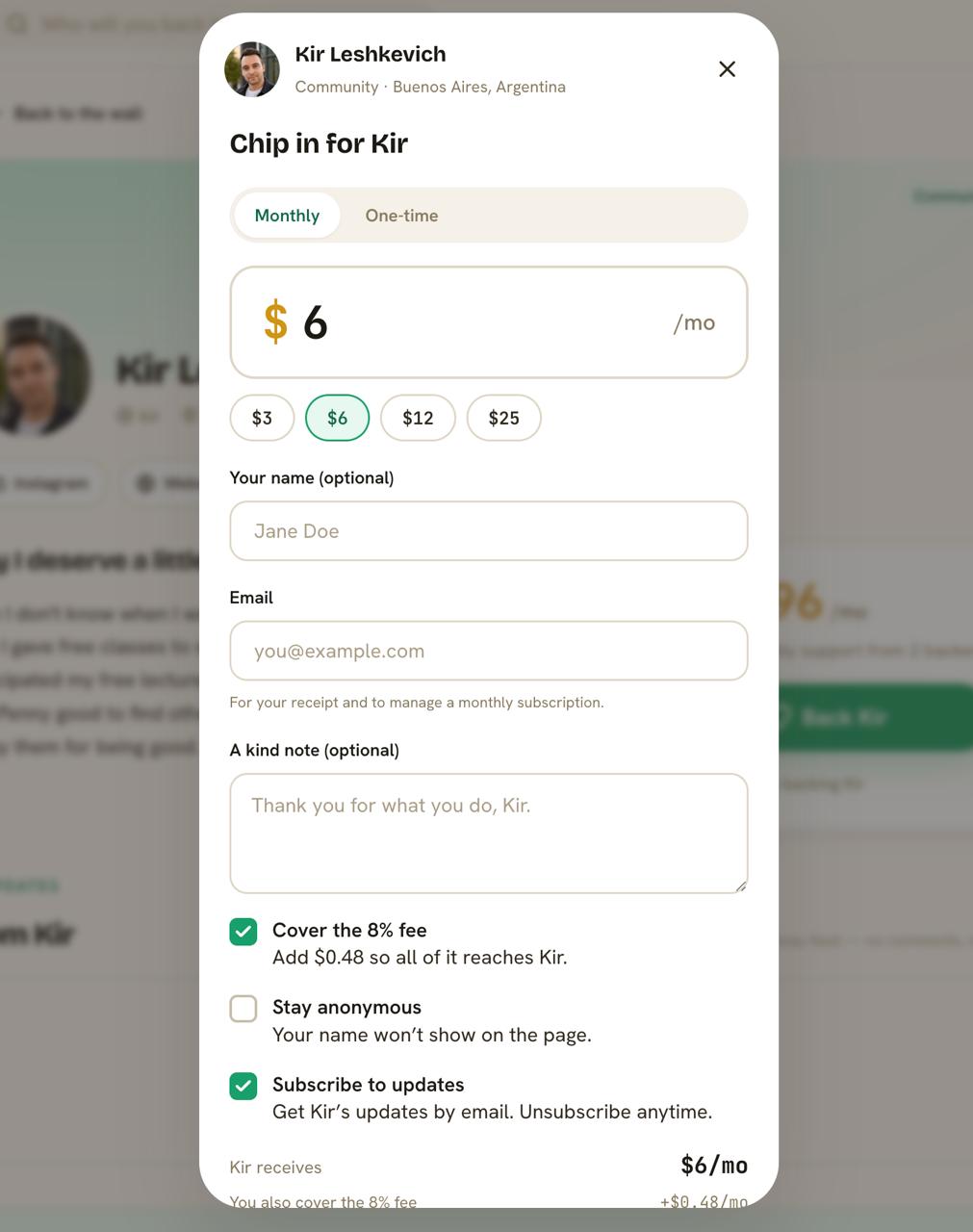
When someone voluntarily supports what you do — with no obligation, no product, no deliverable — that's something different. They're not buying your time. They're acknowledging that what you do matters to them and they want it to continue. That's closer to a neighbour saying thank you than a client paying an invoice.
Your free yoga class is still free. Your community clean-up is still a community clean-up. The people who show up don't pay. The people who choose to support you financially are making a separate, voluntary decision to back the person behind the thing — not to purchase it.
What actually changes when you accept support
Practically: you get a small amount of money that makes it easier to keep doing what you do. That might mean covering the cost of supplies, transport, a venue, or just the time you'd otherwise have to spend working instead of volunteering.
Symbolically: you allow your community to participate in keeping something good alive. Some people want to help but can't show up in person. Backing you financially is how they participate. By not having a page, you're actually removing that option from them.
Psychologically: this one is worth sitting with. Many people find that a small amount of financial support from their community gives them permission to take their own work more seriously. Not because money validates it, but because it's a tangible signal that other people think it's worth sustaining.
What doesn't change
Your work is still free for the people who need it. Your motivation doesn't have to change. You're not accountable to your backers the way you'd be to a client. You don't owe them anything beyond what you were already doing.
Pennygood exists specifically for people like you — people who don't want to monetise their good work in a commercial sense, but who would benefit from their community having a simple way to say thank you with something more durable than words.
A practical note on amounts
The typical Pennygood volunteer receives between $50 and $300/month from their backers. Nobody is getting rich. But for someone doing meaningful work on top of a day job, that's the difference between being able to sustain it and eventually having to stop.
If that money means you keep showing up — and the people who benefit from what you do keep benefiting — then accepting it is the generous choice, not the selfish one.
You can always stop
If it ever starts feeling wrong, you can close your page. The money doesn't trap you. The commitment is on your backers' side, not yours. You're always in control of whether this continues.
But most people who start a Pennygood page don't close it. They find that the support, even when it's small, makes what they're already doing feel more sustainable — and more seen.
Start your page — it takes 10 minutes →