Community
An Hour a Week, Thirty Years Later: Inside Big Brothers Big Sisters
A 1991 experiment followed 959 kids. Decades on, Harvard and Treasury researchers found Big Brothers Big Sisters showing up in their tax records.
By The Pennygood team · Jul 2026 · 4 min read
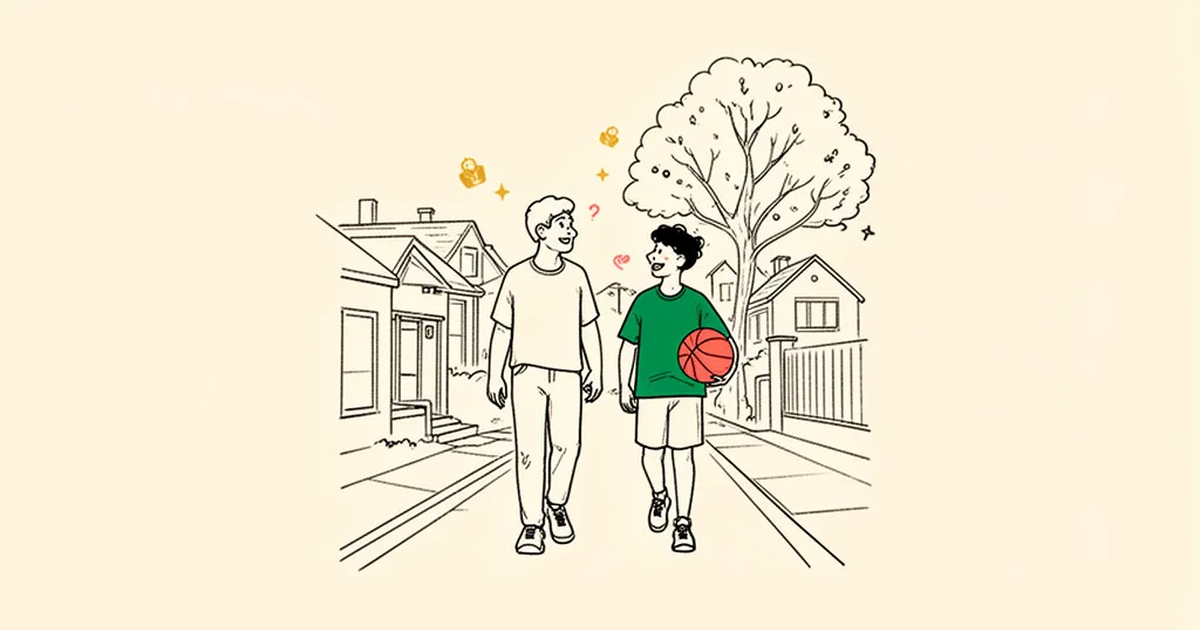
In 1991, researchers enrolled 959 young people in a randomized trial to measure what a Big Brothers Big Sisters mentor was actually worth. The question was modest: how would these kids be doing eighteen months later? Three decades on, a different set of researchers went looking for the same people in federal tax records — and found an answer much larger than anyone had thought to ask for.
What showed up in the tax records
The follow-up, announced by Big Brothers Big Sisters of America on January 27, 2025, was carried out by researchers from Harvard University and the U.S. Department of the Treasury. They took the administrative records of that original experiment — run by Public/Private Ventures and Mathematica Policy Research — and linked them to tax data running into the 2020s. The children in it had been 10 to 14 years old at enrollment. Most came from single-parent households or lived with guardians, and more than half belonged to racial minorities.
The mentored group earned roughly 15% more between the ages of 20 and 25. They were 20% more likely to enroll in college. The strangest result was about who they came to resemble financially: as adults, their income tracked their mentor's more closely than their own family's, closing as much as two-thirds of the socioeconomic disadvantage they had started with.
The arithmetic is unusual for a social program. A match costs somewhere between $2,000 and $3,000 a year. Researchers estimated each mentored young person eventually pays about $7,000 more in taxes — enough for the public to recoup its cost inside seven years — and earns around $56,000 more by age 65. Artis Stevens, the organization's president and CEO, called mentorship "a powerful catalyst for breaking cycles of poverty."
What a match actually asks of you
The intervention behind those numbers isn't a curriculum. It's a person. Big Brothers Big Sisters pairs an adult volunteer — a Big — with a child, a Little, from age five up through young adulthood, then keeps professional staff attached to the relationship to support it over time. What it asks of the volunteer is about an hour a week.
The pitch to volunteers is deliberately unglamorous: no special training, no particular expertise, no need to be a superhero — just someone who reliably turns up. Ginneh Baugh, the chief impact officer, has argued that this is exactly why it works. Where most interventions aim at academics, a mentor gets at the social and behavioral obstacles sitting underneath them.
The clerk who kept seeing the same boys
The idea is old. In 1904, Ernest Coulter, a clerk in New York's Children's Court, noticed how many boys kept passing through it and guessed that what they were missing was one steady adult. He recruited volunteers, and Big Brothers of New York City began. The same instinct surfaced elsewhere at nearly the same moment: the Catholic Ladies of Charity organized Catholic Big Sisters, and in Cincinnati a businessman named Irvin Westheimer started his own version after seeing a hungry child near his office. By 1912 the movement was running in 26 cities.
The two halves stayed separate for most of a century. Big Sisters International, incorporated in 1970, merged with Big Brothers in 1977 to form Big Brothers Big Sisters of America. The national office sat in Philadelphia from the 1980s until 2015, when it moved to Tampa, where it remains.
Where the network stands now
Charity Navigator lists 243 affiliates across all 50 states and puts the number of children served over the past decade at close to two million. It rates the national organization four stars, at 92%. The local agencies do the actual matching and the ongoing support, which is the part the 1991 trial was quietly testing all along.
To help: Big Brothers Big Sisters takes donations directly through bbbs.org, and volunteer sign-ups run through bbbs.org/become-a-big. Because matching happens locally, finding your nearest agency through their site is usually the most direct route in — whether what you have to offer is money or that hour a week.
One last thought. What that research really measured wasn't an institution. It was what one committed adult does for one kid, repeatedly, over years. People do that in every neighborhood, most of them attached to no organization at all, and almost none of them receive anything for it. Pennygood was built for exactly those people — a way for a community to put small monthly support behind an individual who keeps showing up. If that sounds like you, or like someone you know, pennygood.me is where it starts.