Payouts
How Much Money You Actually Get From Small Monthly Supporters
The median Patreon creator made $55 a month, and 0.62% of an audience pays. The real math: how many supporters, at what amount, and what survives the fees.
By The Pennygood team · Sep 2026 · 5 min read
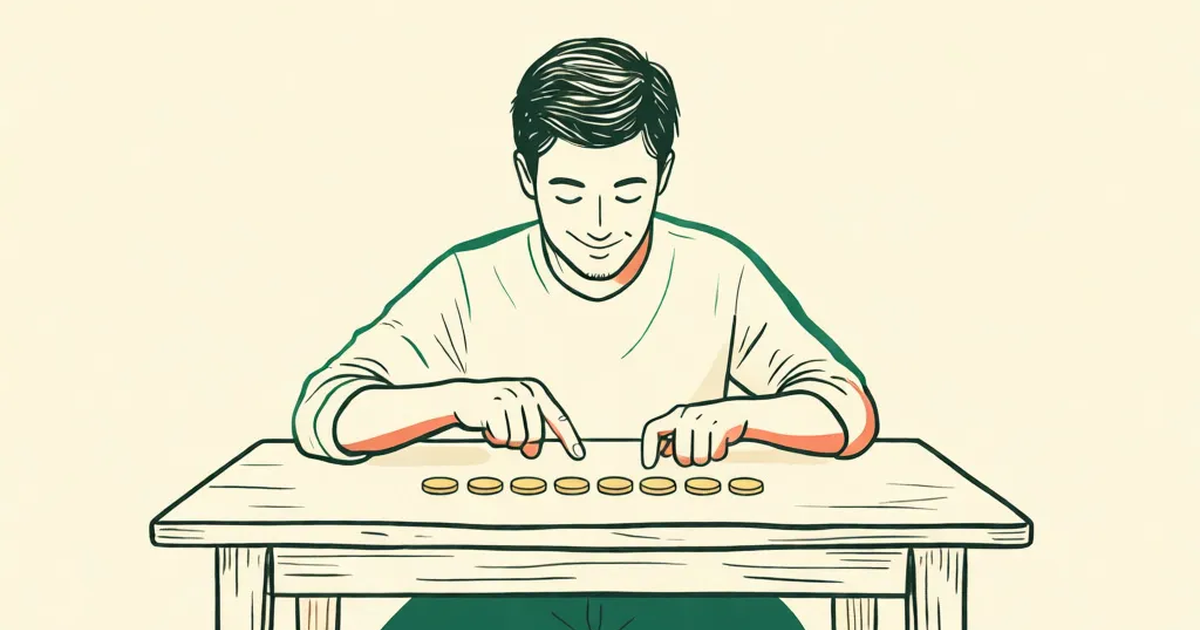
Before you spend two weekends building a support page, there's a question worth answering with numbers: if things go reasonably well, how much money actually lands in your account each month?
The short answer is: a lot less than any creator-income calculator suggests, and almost all of it comes down to two figures nobody quotes you. What share of the people following you actually pays, and how much each one puts in. Using the medians that have actually been measured, a thousand followers turn into about six supporters — roughly $15 a month before fees.
The two numbers that decide everything
The formula is not complicated: people following you, times the share who pay, times the average amount, minus fees. The trouble is the first factor, which nearly everyone overestimates by a factor of ten.
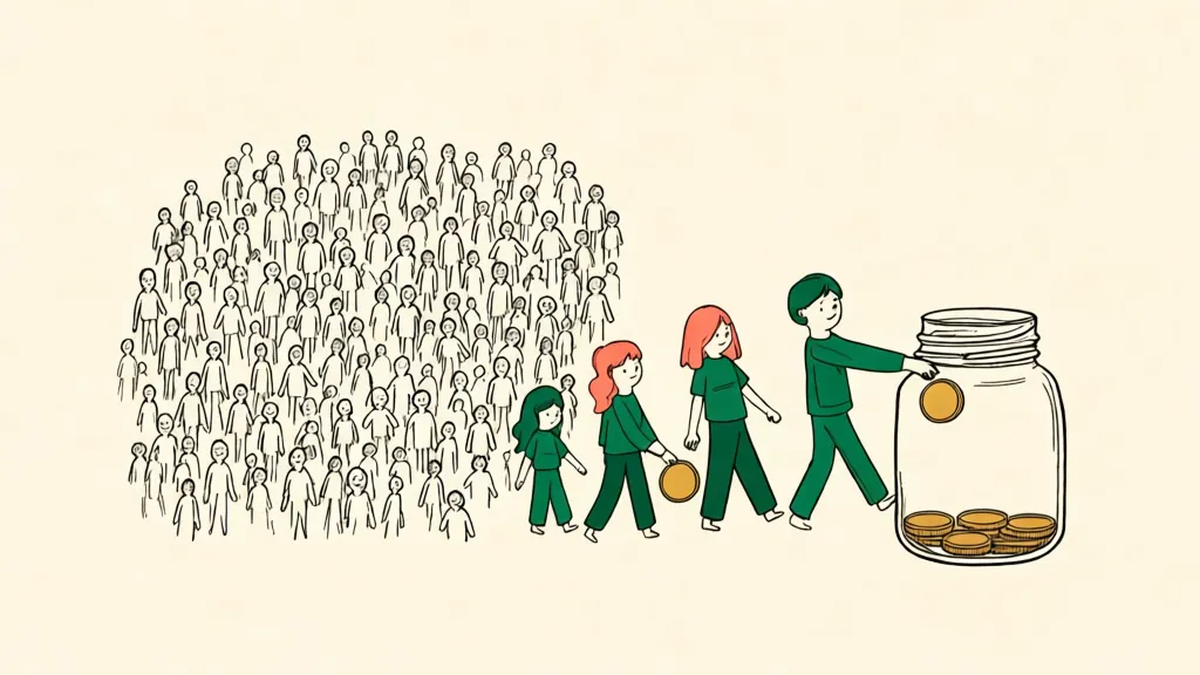
What share of your audience pays?
In June 2026, beehiiv published an analysis of thousands of paid publications on its platform: the median free-to-paid conversion rate is 0.62%. Six per thousand. The top decile in some categories runs far higher — 30.8% in economy, 20% in finance — but half of all publications sit below that 0.62%.
Substack's official guide to going paid promises something else: that they tend to see "5-10%" of free subscribers convert. That's a marketing figure with no dataset behind it. Casey Newton, one of the best-known journalists on the platform, said he landed "closer to 5 percent" against the 10% he'd been told to expect. If someone with that reach came in at half the promise, plan with the median: 200 followers is one or two supporters, a thousand is six, five thousand is about thirty.
How much does each person actually give?
Two researchers at the University of Toronto analyzed the complete set of Patreon pledges — over $2 billion from 2013 through the end of 2020 — and found a wide gap by account size: the highest earners take in almost $15 per pledge, while the lowest earners get $2. On small pages, nearly every patron picks the cheapest tier, so at the start you won't have a mix of $3, $10 and $25 pledges. You'll have the cheapest one, repeated.
Of what they send, how much arrives?
Here's the part that punishes small amounts specifically: some of the fee is a flat charge. Stripe in the US takes 2.9% plus 30 cents per transaction. On $100 that's 3.2%. On $3 it's 12.9%. The percentage is the same for everyone; the fixed cent amount eats small pledges alive.
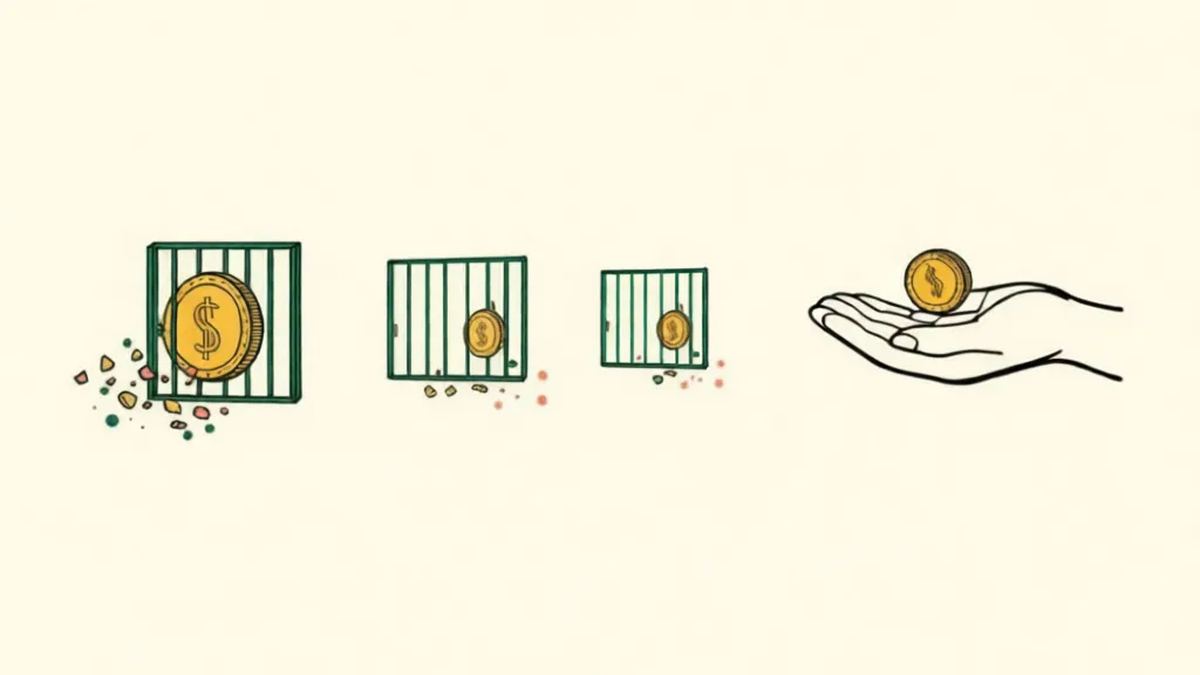
Then the platform fee goes on top. Patreon charges new pages 10%, plus processing, plus 2.5% for currency conversion when you're paid out in a different currency than your supporter was charged. Ko-fi takes 5% on monthly support, with whatever Stripe or PayPal charge on top of that. In Brazil, APOIA.se and Catarse both take 13% and leave you 87%.
And there's the detail that catches people in month three: the payout minimum. Patreon pays out from $10. APOIA.se holds your money until the net balance reaches R$20. Pennygood transfers when the balance reaches $50. With six small supporters you'll accumulate around $15 net a month, which means the first real deposit shows up in month three or four. It isn't a trick, but it's better known in advance.
When does it start being real money?
Here's a good figure that rarely gets quoted. A research team bought Patreon's official monthly earnings data and published the analysis in 2025: in March 2024, across nearly 38,000 creators who were already earning more than $10 a month, the median was $55 a month. The mean was $307. That gap between 55 and 307 is the whole story — a handful of enormous accounts drags the average up and makes something look reachable that, for half of everyone, is $55.
Fifty-five dollars is not a salary. It's $660 a year: the bus fare to get to the place where you volunteer, the materials for a few workshops, the hosting bill. For a lot of people doing something useful for free, that's precisely the line between continuing and quietly stopping.
What real cases look like
Concrete people are more useful than averages here. Derrick Tarrance, an illustrator in Chicago, shut his page in May 2017 with nine supporters and $59 a month. Brent Knepper, a photographer, reached $163 a month with 24 people. Bruno Okamoto, in Brazil, reported hitting 100 paying subscribers and R$1,000 in monthly revenue.
Look at the division. Nine people producing $59 are giving $6.50 each — three times the $2 median pledge. A few close people pay more than a lot of distant ones, and in practice that's the only lever that meaningfully moves the total.
What this math will not fix
If you need to replace an income, recurring support doesn't do it, and none of the data above suggests otherwise. In Tidelift's 2024 survey of open source maintainers, 60% were still unpaid for their work and only 5% received direct payments from individuals. This works as margin: it covers the cost of continuing to do what you already do for free. Framing it as a salary is the fastest way to abandon it by month three.
If the number still works for you after doing the math, Pennygood is one way to collect it: it keeps 8% per transaction, charges your supporters nothing, and deposits to your bank in local currency. Its payout minimum is $50, so at $3 a supporter you need around seventeen people before money moves every month. It's worth opening the page already knowing that number.