Community
Doctors Without Borders: medical care that goes where the need is
Founded by doctors and journalists in 1971, Doctors Without Borders now treats people in crisis in more than 75 countries — and is funded almost entirely by ordinary donors.
By The Pennygood team · Jul 2026 · 3 min read

In 1971, a small group of thirteen French doctors and journalists decided that medical care should not stop at a border, and that someone should be willing to describe what they saw. That double idea — treat the patient in front of you, and tell the world what is happening to them — became Doctors Without Borders, known internationally as Médecins Sans Frontières (MSF).
Care that follows the need
MSF sends medical teams to places many organizations avoid: war zones, refugee camps, disease outbreaks, and regions where the nearest hospital may be days away. Care is offered based on need alone, the organization says, irrespective of race, religion, gender, or political affiliation. The movement has grown to more than 67,000 staff of 169 nationalities, running projects in over 75 countries.
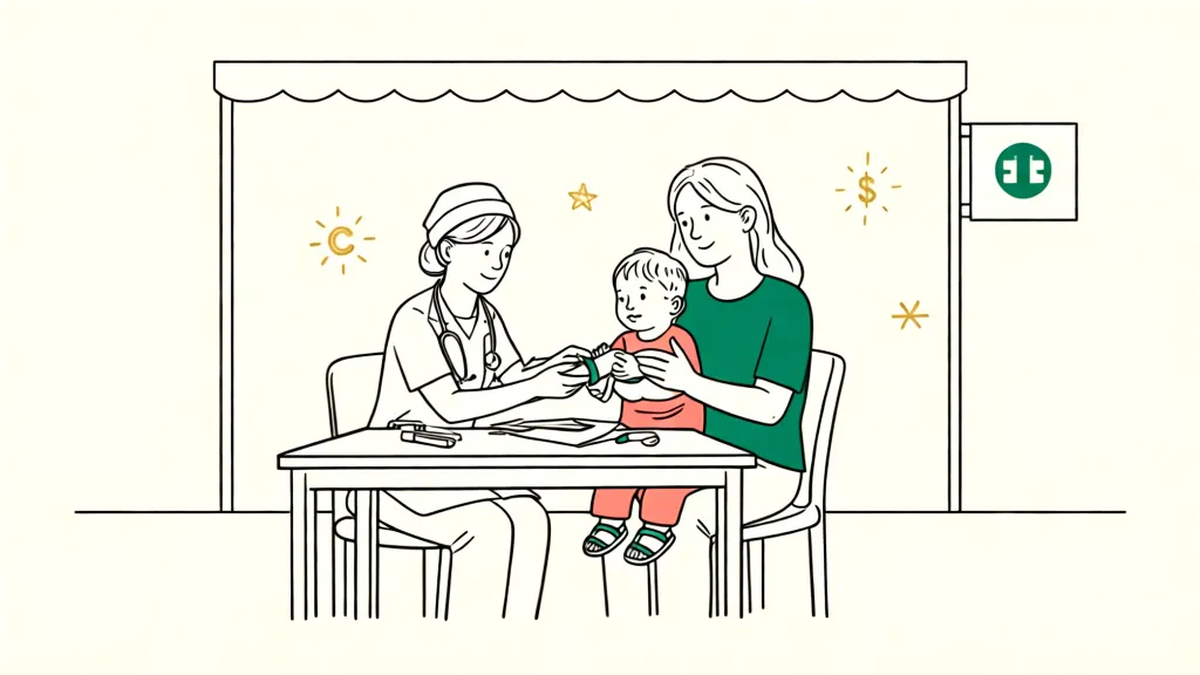
The scale is hard to picture. In 2024, MSF teams carried out roughly 16.5 million outpatient consultations, assisted close to 369,000 births, and admitted hundreds of thousands of severely malnourished children to feeding programs. Their work spans emergency surgery, maternal and newborn care, treatment for epidemics like cholera and measles, and mental health support. Behind each number is a clinic, a midwife, a vaccination line, a child screened for malnutrition with a simple color-coded band around the arm.
Why journalists were in the founding room
The presence of journalists at the start was not an accident. MSF holds that when it witnesses atrocities or neglected suffering, it has a duty to speak — what it calls bearing witness. When the world turns its back on crises, the organization writes, it is duty-bound to raise its voice. Staying silent to preserve access is, in their view, its own kind of harm.
Paid for by people, not governments
That freedom to speak depends on where the money comes from. Doctors Without Borders, USA accepts no government funding at all, and globally about 98 percent of what MSF raised in 2024 came from individual donors and private institutions. Around 90 percent comes from individuals — people giving what they can. Charity Navigator gives the US organization its top four-out-of-four-star rating, and MSF reports that the large majority of its spending goes directly to medical programs and public education rather than overhead.
If you want to help, you can give directly through the organization's own site at doctorswithoutborders.org, where recurring monthly gifts are the backbone of its independence. Medical, logistics, and administrative professionals can also explore fieldwork through the same site.
Doctors Without Borders is a reminder that steady support from ordinary people is what keeps independent, courageous work possible. Pennygood runs on a smaller version of that same idea: it is a place where individuals doing good in their own communities — not large organizations — can receive a little regular support from the people who believe in them. If that sounds like someone you know, or like you, you can learn more at pennygood.me.