Community
Feeding America: The Idea That Turned Surplus Food Into Billions of Meals
How a single suggestion in the late 1960s grew into Feeding America, the largest hunger-relief network in the United States.
By The Pennygood team · Jun 2026 · 2 min read
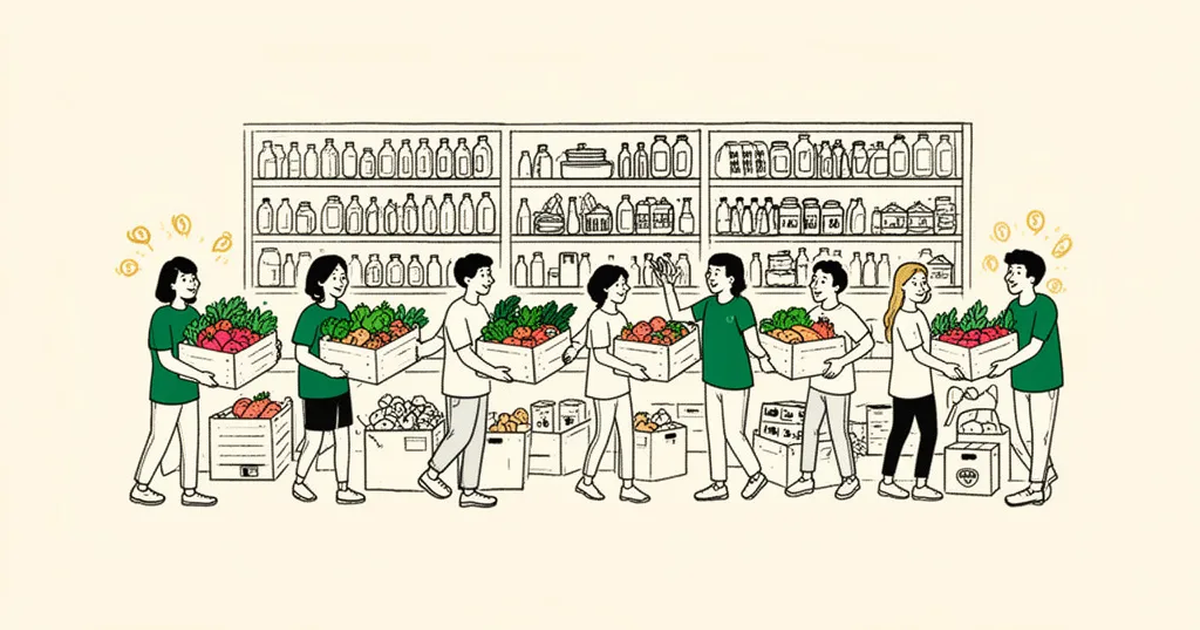
It started as a suggestion. In the late 1960s, a mother visiting a meal program in Phoenix, Arizona, pointed out something obvious and overlooked: grocery stores were throwing away good food while families nearby went without. Why not store the surplus somewhere — like a bank — so people could draw on it when they needed it?
A bank, but for food
The volunteer who acted on that idea was John van Hengel, and he took the metaphor literally. In 1967 he founded St. Mary's Food Bank in Phoenix, the first food bank in the country. Donated and rescued food came in; community programs drew it back out. The model spread from city to city, and the national network it grew into eventually took the name Feeding America in 2008.
How the network actually works
Feeding America isn't a single warehouse — it's a federation. More than 200 member food banks anchor the system, backed by 21 statewide associations and over 60,000 local partners: neighborhood pantries, soup kitchens, shelters and meal programs. The national office sources food at scale, from manufacturers, farms and retailers, and routes it to the food banks, which pass it on to the local agencies people actually walk into. That reach now covers 100% of U.S. counties.

A large share of what moves through the system would otherwise have been wasted. In a recent year the network rescued 4.3 billion pounds of wholesome food that would have been thrown out, and turned it into groceries instead.
The scale of the need
The network keeps growing because the problem does. Feeding America estimates that about 48 million people in the United States face food insecurity, including roughly 1 in 5 children. Against that, it distributed some 5.9 billion meals in a single year — a figure that reads less as a boast than as a measure of how much hunger persists in a wealthy country.
Supporting the work
Feeding America takes donations directly at feedingamerica.org, and its site has a tool to find your nearest member food bank — usually the best place to give food, money or time, since each bank serves its own community. Volunteers keep most pantries running: sorting, packing and handing out groceries, shift after shift.
Behind every food bank are individuals who simply keep showing up — the person who drives the same delivery route each week, the neighbor who organizes a pantry shift. Pennygood is a platform for supporting people like that directly, with small monthly contributions from their community. It has no connection to Feeding America, but if someone you know does quiet, steady good, they can start a page at pennygood.me.