Growing
Nobody Is Supporting My Page: Is It the Page or the Traffic?
Zero supporters usually means too few visitors, not a bad page. How to tell which, and four page changes with real evidence behind them.
By The Pennygood team · Sep 2026 · 5 min read

You set up the page. You wrote the bio, picked the amount, posted the link, told a few friends. It's been three weeks and the counter still says zero, and you've started wondering whether the problem is you.
It almost certainly isn't. An empty support page has one of two problems: not enough people have seen it, or the people who saw it didn't get a reason to act. They need different fixes, and most people reach for the wrong one — rewriting their bio for the fourth time when forty people have ever opened it.
How many people have actually seen it?
Find that number before you change a word. Ko-fi and Buy Me a Coffee both let you connect Google Analytics to your page, which shows visits and where they came from (Ko-fi asks you to opt in as a Contributor first). If that's more setup than you want, count by hand: how many posts carried the link, and how many people you sent it to directly.
Then compare it to this. In 2022 Fatih Telis, who runs a free online tools site, posted on Indie Hackers that his Buy Me a Coffee page had 4,206 visitors and 2 supporters. A commenter replied that his own project got about 500,000 views on Reddit and one coffee.
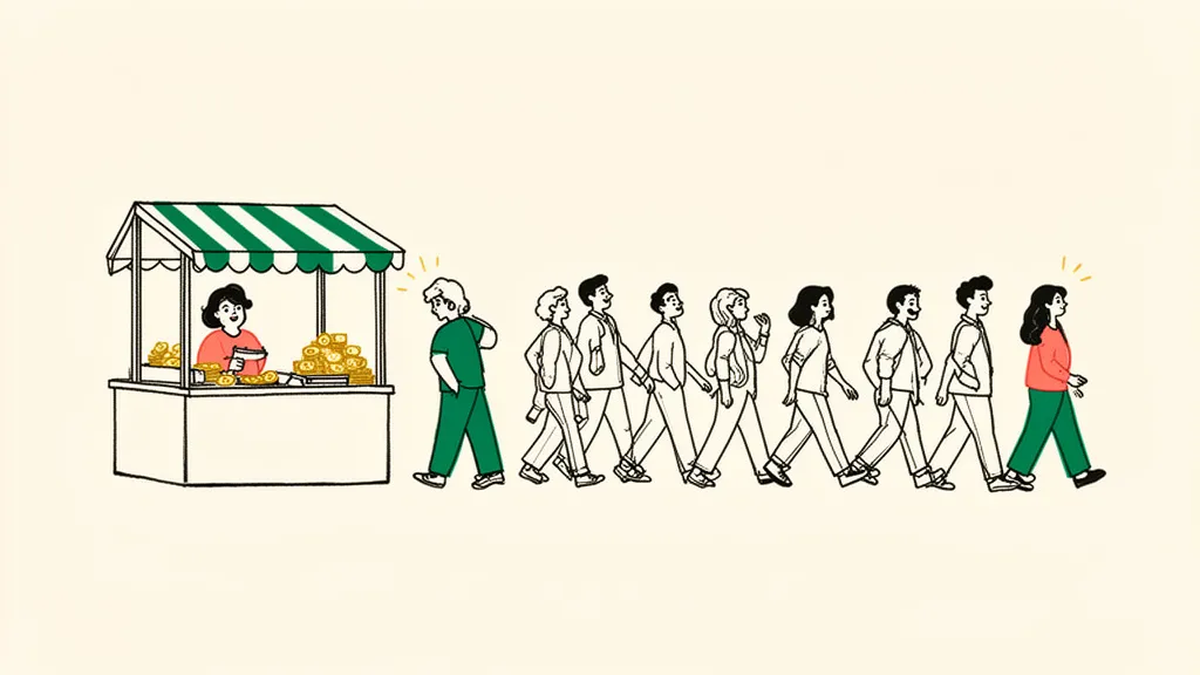
Those were strangers using a free tool, the coldest audience there is, so don't read them as your conversion rate. Read them as the scale. If fewer than a few hundred people have ever landed on your page, zero supporters tells you almost nothing about the page. Your problem is reach, and the fix is asking people who already know what you do, one at a time, not polishing copy.
People are visiting and still leaving. What do I change?
If the page has had real traffic and nothing came of it, these four changes have evidence behind them. They're in order of effort.
1. Show one moment, not the size of the problem
In a 2007 study by Deborah Small, George Loewenstein and Paul Slovic, people who had just been paid $5 were asked to give some to Save the Children. Shown a photo and short story of one girl, they gave $2.38 on average. Shown statistics about the food crisis, $1.14. Shown the girl and the statistics together, $1.43 — the numbers dragged the story down.
So cut the paragraph about how many people in your city are lonely, hungry or behind in school. Replace it with one Saturday: who came, what you did, what it cost. Then add a real photo of you doing it.

2. Name one small amount, and say small is fine
In a phone fundraiser studied by Jonathan Edwards and John List (2014), suggesting a $20 gift raised the share of alumni who gave from 3.01% to 4.47%. The average gift fell, from $23.92 to $19.35, because people clustered on the suggestion. A public broadcasting experiment by David Reiley and Anya Samek found the other side: raising the suggested amounts about 20% cut the chance of giving about 15%. And a 1976 door-to-door study found that adding "even a penny will help" got more people to give without shrinking the average gift.
The lesson for one person: a single, low, specific number, plus a line that makes it okay to give that little. "$3 a month covers the snacks" beats "any amount helps."
3. Put a goal on the page, and don't launch it at 0%
Ko-fi says pages with a goal earn about twice as much on average. That's the company's own observation, not an experiment — people who bother to set goals may simply be more active. There's firmer evidence for the part that matters: in a 3,000-household university campaign, John List and David Lucking-Reiley found that announcing 67% of the goal as already raised, instead of 10%, brought in nearly six times as much.
You can't announce money you don't have. But you can set a goal small enough to be reachable, and ask two people close to you to be first before you share the page anywhere public.
4. Don't lean on "others are supporting me" yet
Social proof is weaker than its reputation. When Bruno Frey and Stephan Meier told University of Zurich students that 64% of their peers had given to two student funds, 77.0% gave. Told 46%, 74.7% gave. That gap was real only after accounting for each student's past giving. And you have nothing to show yet, so skip "join our growing community" — at zero supporters, it reads as false.
What if the page is fine and it's just slow?
Sometimes it is. Two writers of a small newsletter reported that over two years, 17 people sent them 34 coffees, €102 in total — and that the coffees came when they reminded readers and simply asked. Ko-fi's own guide makes the same point: only a small share of your followers see any one post, so the link has to come back regularly. Slow isn't broken. Silent is.
Should I switch platforms?
Rarely first. Moving an unseen page to a new address gives you an unseen page somewhere else. The exception is checkout: open your page on your phone, in a private window, and try paying the way the people who know you actually pay. If that fails, fix it before anything else.
If what you do is unpaid work for other people rather than content you sell, Pennygood is built for that: every active page shows up in a public feed that search engines index, so a stranger searching for what you do can find you. That helps a little with reach, but it won't rescue a page with no person, no amount and no moment on it — and it keeps 8%, where Ko-fi takes nothing on tips.