Community
Ocean Conservancy Asks Beach Cleanup Volunteers to Do One Extra Thing: Count
For 40 years, Ocean Conservancy's volunteers have written down every item they pick up — and that tally has changed laws.
By The Pennygood team · Aug 2026 · 4 min read
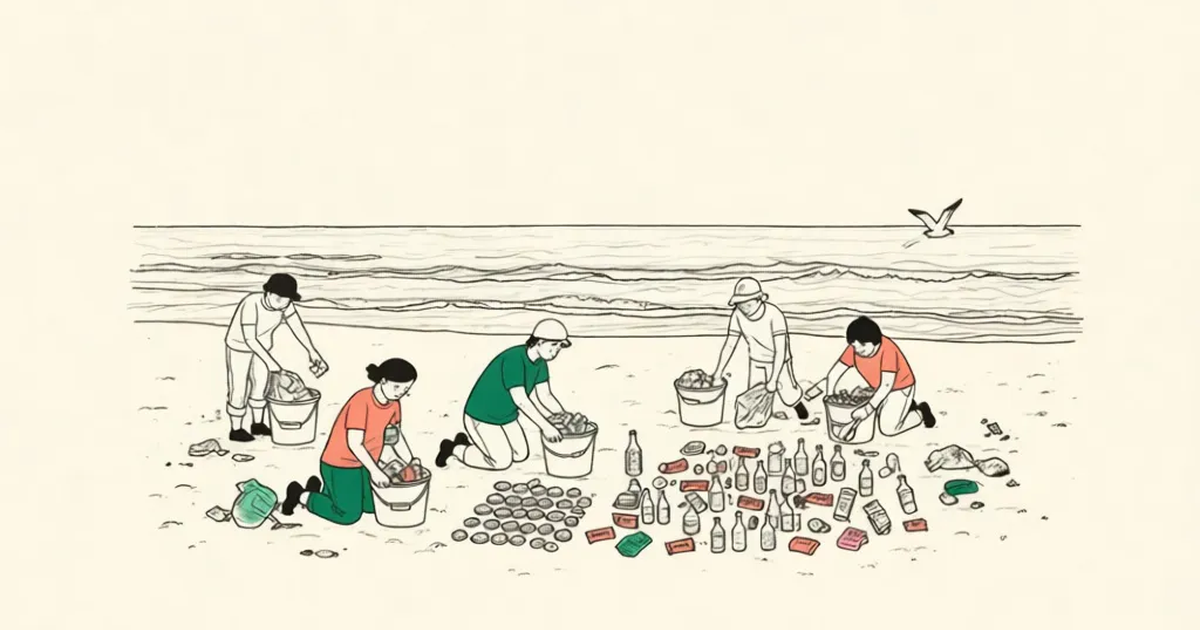
Picking a bottle up off the sand takes two seconds. Writing down that you picked up a bottle takes four. That second step is the whole idea behind the International Coastal Cleanup, the volunteer effort Ocean Conservancy has run since 1986.
It started in Texas, in the rain
Linda Maraniss had opened an Ocean Conservancy office in Austin in 1985, and what she saw on the Texas coast bothered her. Her colleague Kathy O'Hara had just researched a report on plastics in the marine environment — where the debris came from, what it did to animals. In 1986 the two of them worked with the Texas General Land Office, local businesses and other volunteers to organize a cleanup.
The morning opened with a heavy rainstorm. It cleared around 9 a.m., about when busloads of schoolchildren started pulling up to the beaches. By Ocean Conservancy's own account, 2,800 people turned out.
What separated that day from ordinary litter patrol was the paperwork. Maraniss and O'Hara handed volunteers a standardized data card and asked them to record each item — not the weight of the bag, the item. O'Hara's reasoning was that people "didn't need extensive training to become citizen-scientists."
Nineteen million people, one database
Nearly 19 million volunteers have joined since, removing more than 400 million pounds of trash from beaches and waterways worldwide — roughly 10,000 garbage trucks' worth, by the organization's math. The cleanup still has a headline day each September; in 2025, its 40th year, that day was Saturday the 20th.
The 2024 figures give a sense of a single year: over 486,000 volunteers, more than 7.4 million pounds, and close to 18 million individual items logged. The three most-found were food wrappers (1,442,860), plastic beverage bottles (1,284,225) and cigarette butts (1,227,124). Volunteers also pulled out more than a million plastic bags.

The paper card still exists, but most people now use Clean Swell, Ocean Conservancy's free app, available in about a dozen languages. Every entry feeds what the organization describes as the world's largest database on marine debris.
What a tally sheet can do
Counting sounds modest until you see where the counts end up. Ocean Conservancy says its cleanup data has been used in more than 40 published scientific studies and cited by more than 250 papers. In June 2025, a peer-reviewed study in the journal Science drew on that data to test whether plastic bag bans work; it found such policies cut plastic bags in the surveyed environments by 25 to 47 percent.
The same records keep showing up in policy fights: California's SB 54 on single-use plastics, Florida's balloon release ban, and the federal Farewell to Foam Act, which Ocean Conservancy endorsed and which would phase out single-use plastic foam. In Maryland, the first state to ban foam foodware, the number of foam foodware items volunteers collected fell by 65 percent after the law took effect.
It works at the smallest scale too. One cleanup coordinator gathered hundreds of cigarette butts from a single beach and carried them to city hall; the city voted to ban smoking there.
The rest of the work
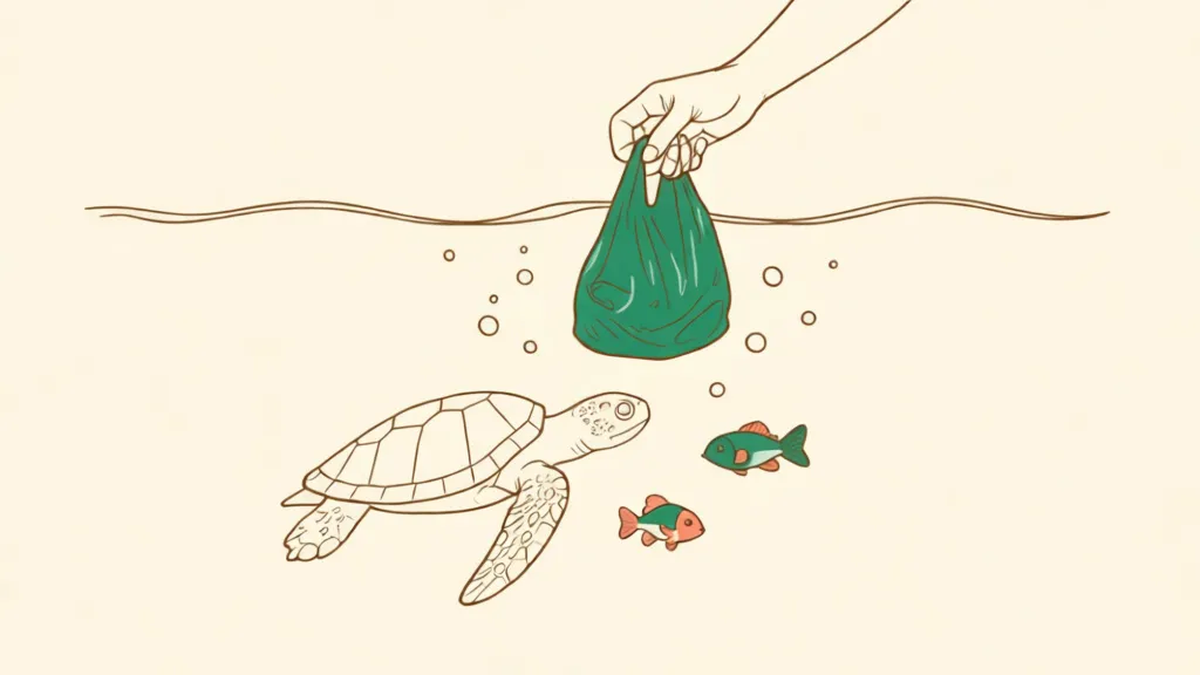
Ocean Conservancy was founded in 1972 and is based in Washington, D.C. Cleanups sit inside a wider program: ending ocean plastics, advancing climate solutions, and protecting marine biodiversity. The size of the underlying problem is why the counting matters — an estimated 23 million metric tons of plastic waste enter the world's aquatic ecosystems every year, and roughly 1,300 ocean species have been documented eating plastic.
Charity Navigator rates the organization four stars with a 91% overall score, and gave it full marks on its accountability and finance metrics in fiscal 2025.
If you want to join one
Ocean Conservancy's site keeps a map of cleanups run by local coordinators, plus a toolkit for anyone who wants to organize their own. If nothing is happening near you, the app works solo — a walk along a river counts, as long as you log what you find. Donations go directly through oceanconservancy.org/give.
Behind every one of those 19 million entries is a person who gave up a Saturday morning. Pennygood is built for exactly that kind of person: a way for a community to send small monthly support to an individual who quietly does good work. Ocean Conservancy isn't on Pennygood, and this isn't a channel for donating to them. But if someone in your town is the one organizing the cleanups, they can start a page at pennygood.me.