Payouts
Can an individual receive Pix Automático? No — here's what works without a CNPJ
Brazil's central bank only lets CNPJ holders receive Pix Automático. What works on a CPF, what's left of R$15 on each route, and when an MEI pays off.
By The Pennygood team · Sep 2026 · 5 min read

You live in Brazil, or your supporters do, and you heard about Pix Automático: supporters approve once, and every month the money arrives on its own, no card and no platform in between. Then you went to switch it on for your account and only found menus for businesses.
It isn't your bank. An individual can't receive Pix Automático. The rule comes from the Banco Central do Brasil: the receiver has to be a legal entity with an active CNPJ, and the central bank's own FAQ says the service doesn't apply to transfers and payments to individuals. On a CPF you have three real options: a recurring scheduled Pix (Pix agendado recorrente) that your supporter sets up in their own app, a platform that bills them every month, or opening an MEI. Each one changes who has to remember the payment and who pays the fee.
Why won't Pix Automático work with a CPF?
It was built for company bills that repeat: power, internet, school, gym. It doesn't use Pix keys at all. The company's bank or payment provider sends a payment instruction each cycle, and the payer only authorizes once. Banks must offer the paying side, but the receiving side is optional for them, and where it exists it requires a CNPJ. The central bank itself says that for periodic payments to a Pix key, the tool is the recurring scheduled Pix.
Recurring scheduled Pix: what works with your Pix key
Since October 28, 2024, every bank and digital account in Brazil has had to offer recurring scheduled Pix. Your supporter opens their app, picks your key, the amount and the frequency (Nubank offers monthly, every two weeks or weekly), and the Pix goes out by itself on the chosen date. Pix between individuals has no fee, so R$15 arrives as R$15.
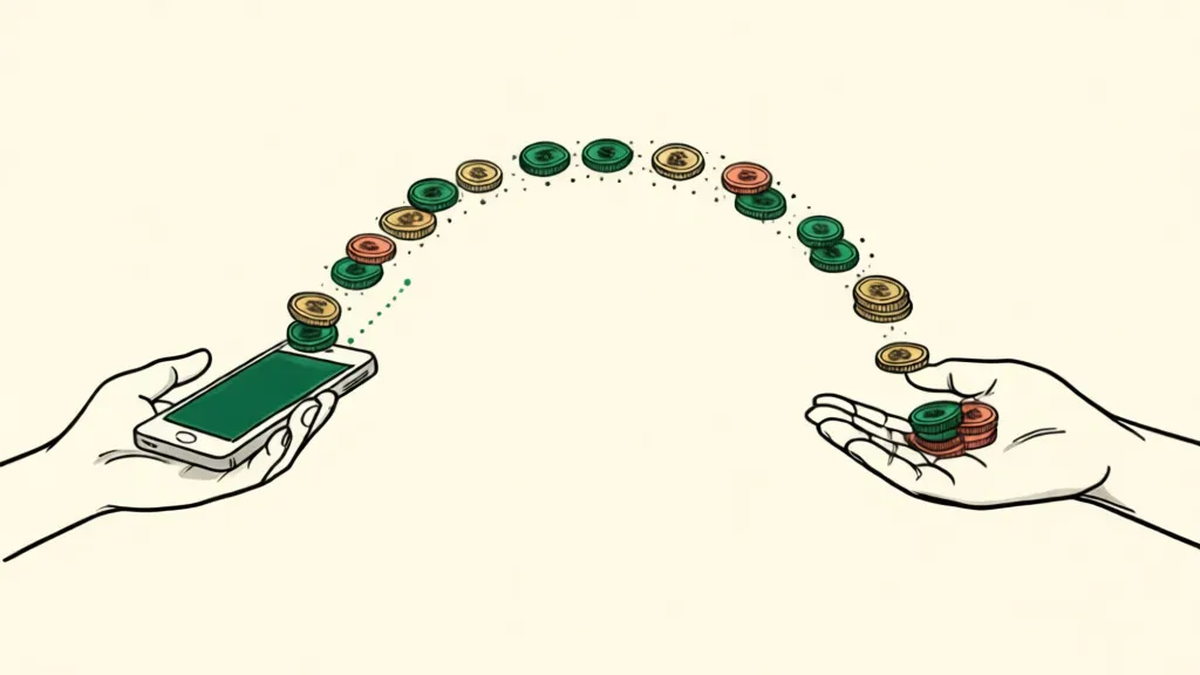
The catch is that all the control sits with them. You see no authorization, you have no supporter list, and nobody tells you when someone cancels. You find out when the money doesn't show up. Nubank also warns that, depending on the bank, a scheduled Pix can go out even without balance, drawing on the supporter's overdraft, with interest.
You can make it easier in the message where you ask:
- Send your Pix key in a form they can copy, and suggest an amount and a day of the month. A day just after payday tends to work best.
- Ask them to set it with no end date, or for 12 months if they'd rather have a limit.
- Mention they can cancel from their own app at any time. It reassures people more than you'd think.
- Keep a spreadsheet of who set it up, how much and on what day. It's the only supporter list you'll have.
Isn't the Pix option on APOIA.se automatic?
Not quite. On APOIA.se, a supporter who picks Pix gets a hybrid boleto every month. They can pay it by QR code or barcode, due on the 10th, 15th or 25th, whichever they choose. The platform adds a R$2.00 fee on top of the support. Paid by Pix, it clears within an hour; by barcode, within three business days. But the person still has to pay it by hand every month.
What renews on its own on APOIA.se is the credit card, charged on the 1st with no extra fee. Whatever the payment method, the fee on ongoing support is 13%, and payouts go out by the 10th business day of the month once you have R$20 net. In return you get a public page that shows how many people support you, which helps when support comes from people who don't know you yet.
What if I open an MEI just for this?
With a CNPJ, Pix Automático becomes possible, but do the math first. In 2026 the MEI tax payment (DAS) for services is R$86.05 a month, owed whether anyone supports you or not. A CNPJ alone isn't enough either. At Asaas, one of the companies offering Pix Automático collection, your CNPJ must have been active for at least six months, with a registered activity (CNAE) that fits the product. Each Pix received costs R$1.99 (R$0.99 for the first three months).

With ten supporters at R$15 each, here's how it works out:
- Recurring scheduled Pix: R$150 a month, no fees.
- APOIA.se: R$130.50 (87%), and anyone paying by boleto or Pix spends R$17 a month.
- MEI + Pix Automático on Asaas: R$150 − R$19.90 in fees − R$86.05 DAS = R$44.05.
At that price point the MEI never catches up with the platform, because the per-Pix fee alone eats almost as much as the 13%. It only makes sense if you already have an MEI for your work and the support is connected to it, so the DAS is a cost you're paying anyway. Even then, talk to an accountant: money from supporters can count as a gift or as payment, and that changes how you declare it.
So which one should I pick?
- A few people you know, all in Brazil: recurring scheduled Pix. It's the cheapest option there is, and the arrangement runs on trust anyway.
- You want strangers to find and support you: a platform. Nudge people toward card, the only method that renews without anyone remembering.
- You already have a CNPJ with a matching activity: Pix Automático through a provider that offers collection. Compare the fixed fee per Pix, which hurts more the smaller the support.
If some of your supporters live outside Brazil, none of these three helps. That's the case Pennygood is built for: supporters pay by card in US dollars through Stripe, you get paid in reais, and the platform fee is 8%. Supporters inside Brazil would pay IOF on a dollar card charge, so if everyone is local, recurring scheduled Pix is cheaper, and that's a perfectly good choice.