Growing
How to Get Your First Supporters When Nobody Knows You: the 12-Name List
Your first supporters won't be strangers. How to build the 12-name list, what to write in the message, and what's actually left at the end of the month.
By The Pennygood team · Sep 2026 · 5 min read
Your page has been up for two weeks. You posted the link on Instagram, a few people liked it, nobody backed you. And then comes the thought that makes most people quit: nobody knows me, this isn't going to work.
The short answer is that your first supporters almost never come from strangers. They come from people who have already watched you do the thing — and almost always after a direct, private ask, one person at a time. A public post isn't an ask. It's an announcement.
Why the post got you nothing
Because a post is addressed to everyone, which means to nobody in particular. Whoever reads it thinks "that's nice," keeps scrolling, and feels no responsibility to answer. A message that starts with someone's name is a different object: it asks for a reply.
There's also the zero problem. Vakinha, a fundraising platform that tracks thousands of campaigns, puts it plainly: people who see that a campaign already has supporters feel safer helping too, and campaigns with early support tend to raise more. A page with no supporters is asking a stranger to be the first one to trust you. Almost nobody wants that job.
Crowdfunding research points the same way. Stephanie Brooke Escudero, a management professor at Colorado State University who studies it, sums up that projects reaching around 30% of their goal early in the campaign are almost certain to succeed, and that the initial push nearly always comes from the founder's close network of friends, family and community. Strangers join after that, not before. Her work is about one-off campaigns rather than monthly support, but the order is the same: people who already know you first, everyone else later.
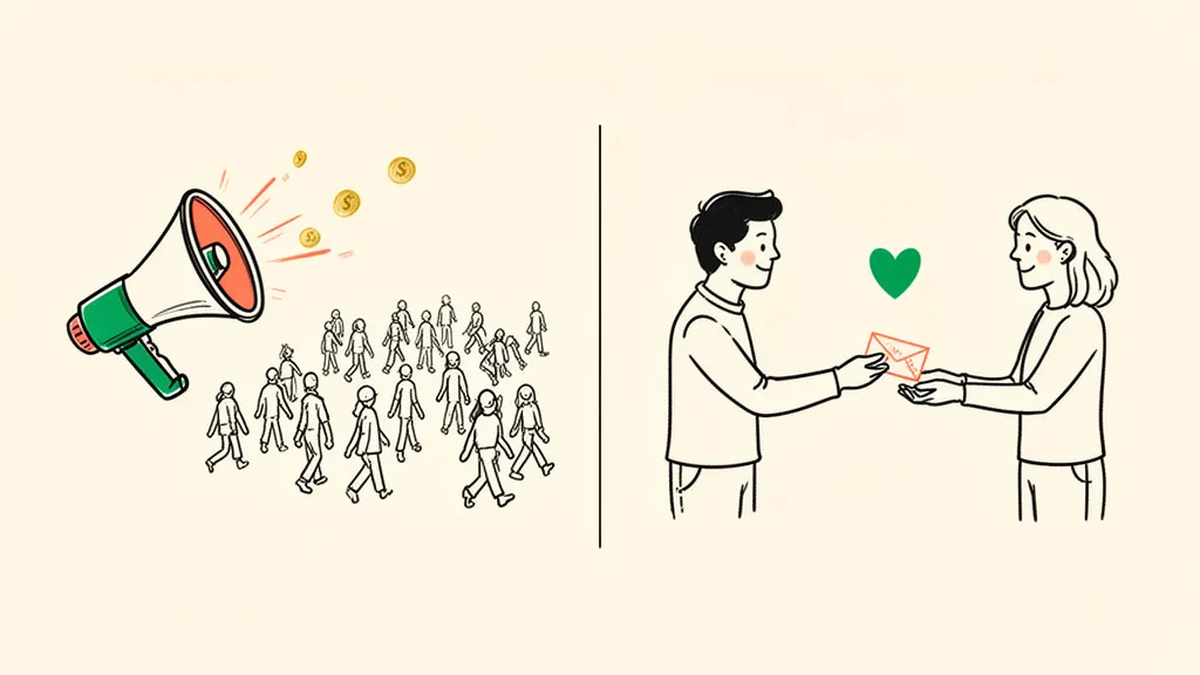
Write the twelve-name list
This is not a list of friends. It's a list of people who have already seen you do the work. Sit down and write twelve names using these tests:
- People who benefited directly: the parent of the kid you tutor, the neighbor whose cat you got fixed, whoever lives on the street you clean.
- People who have already said "let me know if you need anything." That sentence is a supporter waiting for instructions.
- People who have already given you something material: a ride, a bag of pet food, a room to borrow, free printing.
- People who see you every week where you do it: the woman at the bakery, the building super, the teacher at the school.
Who doesn't go on the list: people you admire who have never watched you work, distant professional contacts, and entire group chats. Twelve is enough. If three say yes, you're off zero — and getting off zero is the whole job.
What to write in the message
The message that works has four parts and fits in five lines: what you do (concretely), what the money covers, an exact amount, and an easy way out.
"Hi Dana. You know I tutor the kids in the building in math on Tuesdays and Thursdays. I've set up a page to take a small monthly amount so I can cover materials — notebooks, copies, pens, about $25 a month. If $5 a month fits your budget, it would help a lot. If it doesn't, that's genuinely fine and nothing changes between us."
Notice the exact amount. "Any amount helps" makes the person decide two things — whether to support and how much — and deciding two things is what makes someone put it off and forget. Notice the way out, too. Without it your ask becomes a social debt, and people avoid whoever they owe.
The part that works better in person
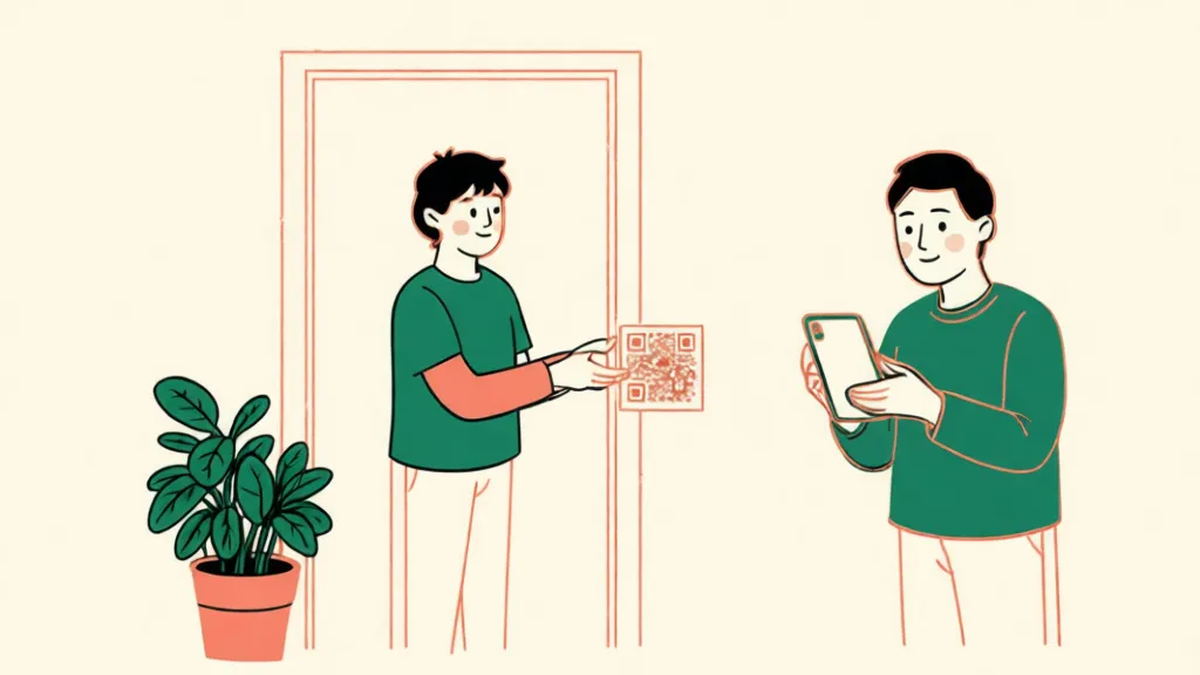
If what you do happens in person — a class, a clean-up, a food run — the best moment to ask is right there, immediately after, while people are still in the mood of what just happened. Carry a small printed card with your page's QR code on it. A good share of the people who end up supporting you aren't the ones who follow you online. They're the ones who were there.
What if nobody answers?
Half of them won't answer in the first week. That isn't a no — it's a message read on the bus and forgotten. Don't repeat the same ask to the same person a few days later. Chasing people wears them out and costs you your name.
What works is changing what you send. Instead of asking again, send an update: the photo from Saturday's class, how many kids showed up, what you bought with what already came in. The people who watched you keep going without money are the ones who say yes the second time. Proof that you're not going to disappear beats any amount of persuasive writing.
What "first supporters" actually looks like
Five people at $5 a month is $25. Some of it goes to fees before it reaches you — a platform cut plus card processing, and the exact number varies a lot by platform and country. Read your platform's fee page before you promise anyone a figure, and quote the amount that actually lands, not the headline one.
This is not income, and pretending otherwise helps nobody. It's the month's materials, the bus fare, the pet food. It's exactly the amount that decides between continuing and stopping for a stupid reason. And it's the number that makes the sixth supporter far easier to get than the first.
Where to actually receive it
You need somewhere the support repeats on its own, without depending on someone remembering you every month. A one-off transfer is easy to send, but it's a single gesture: next month it all rests on the other person's memory.
Pennygood is one of those places, built for people who do something useful and don't charge for it: a personal page, support from $3 a month, an 8% fee, and a QR code ready to print. Payouts run through Stripe, so check whether your country is on the supported list before you count on it.
No platform solves the hard part. The hard part is the twelve-name list and the first message — and that one you write tonight.