Community
Reading Partners: The Room Down the Hall Where Kids Learn to Read
In 179 school reading centers, volunteers with no teaching background deliver a science-of-reading curriculum twice a week — and an independent trial found it works.
By The Pennygood team · Jul 2026 · 5 min read
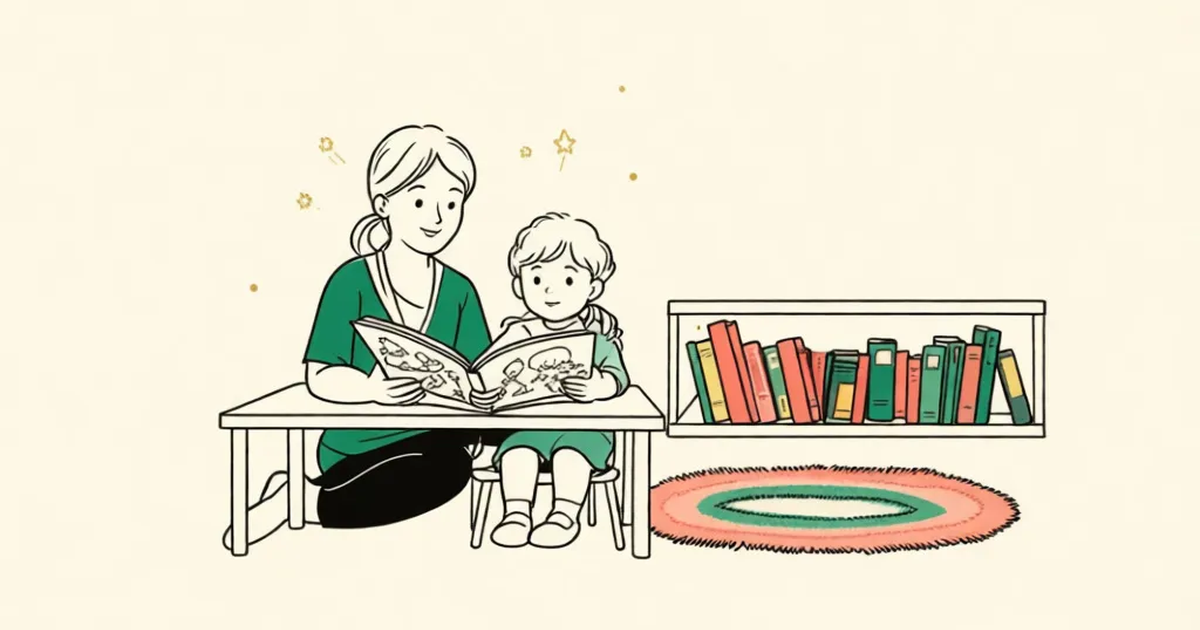
In 179 elementary schools around the country there is a room that isn't a classroom. It has low tables, a shelf of picture books, and room for two people at a time: a child who has fallen behind in reading, and a volunteer who is not a teacher. Reading Partners built its entire model around that room.
Two forty-five-minute sessions, every week
The organization works with students from kindergarten through fourth grade who sit somewhere between six months and two and a half years behind grade level. Each of them gets two 45-minute sessions a week — around 30 sessions over a school year — one-on-one, in the school's own reading center.
The curriculum is custom-built and aligned with the science of reading, covering all five literacy domains: phonological awareness, phonics, fluency, vocabulary and comprehension. It is taught explicitly and in sequence, and a student moves on only after mastering what came before. The pace is set by one child's progress rather than a classroom's schedule.
The expertise lives in the curriculum, not the tutor
This is the part most people don't expect. Reading Partners asks for no teaching experience at all — the organization states plainly that none is required, because the curriculum, the training and the ongoing support are what carry the instruction. Orientation takes one to two hours. From there, an AmeriCorps program coordinator based at the school coaches tutors as they go, with optional literacy workshops and a library of training videos for anyone who wants to go deeper.
The ask is deliberately small: one session at the same time each week, which works out to a little over an hour once prep and wrap-up are counted. Depending on the region, tutoring happens in person in the school's reading center or online through the organization's virtual platform — online tutors need a webcam, reliable wifi, and to be in the US while they tutor. More than 300 AmeriCorps members currently hold those sites together.
What an independent trial found
In March 2015 the research organization MDRC published a randomized controlled trial of the program, run across 19 schools in three states during the 2012–13 school year, with more than 1,100 students assigned at random to tutoring or to a control group. The students who received Reading Partners showed statistically significant gains on three separate measures — reading comprehension, sight-word reading and fluency — worth roughly one and a half to two additional months of reading growth, and the benefit held consistently across subgroups of students.
MDRC also looked at the economics. Because most of the labor arrives as donated volunteer time, the schools themselves carried only about 20 percent of the program's cost, about $710 per participating student. In 2017, Research for Action named Reading Partners one of five effective one-on-one literacy tutoring programs.
The organization's own most recent figures, for the 2024–25 school year: 88 percent of K–2 students met or exceeded their primary literacy growth goal, and 83 percent of all its students did.
From three tutors in Menlo Park to twelve regions
It began in 1999, when Mary Wright Shaw, Molly McCrory and Jean Bacigalupi started tutoring struggling readers at Belle Haven Community School in Menlo Park, California. The group incorporated as a nonprofit in 2001 under the name YES Reading, hired its first full-time executive director in 2004, and became Reading Partners in 2008 as it moved into Oakland, San Francisco and Los Angeles. A first AmeriCorps grant in 2010 carried it to Washington, DC; New York City followed in 2011, then Baltimore, Dallas and Denver, then Tulsa, Charleston, Seattle, the Twin Cities and Charlotte.
More than twenty-five years on, the organization counts over 3 million individualized tutoring sessions delivered, close to 90,000 elementary students reached and more than 100,000 volunteers mobilized. Its direct tutoring runs in the SF Bay Area, Los Angeles, Minnesota, Tulsa, North Texas, South Carolina, the Mid-Atlantic and New York City. A second model, Powered by Reading Partners, hands the curriculum and training to schools, afterschool providers and community groups in places including Seattle, Denver, Detroit, Newark, New Haven, San Jose, Memphis and Monroe, and adds family literacy support alongside the tutoring.
Getting into a reading center
Both volunteering and giving run through readingpartners.org directly. The volunteer page lists the twelve regions currently recruiting — Baltimore, Detroit, Los Angeles, Minnesota, Newark, New York, North Texas, Seattle, the SF Bay Area, South Carolina, Tulsa and Washington, DC — and takes sign-ups for in-person and online tutoring. The donation page spells out what gifts pay for, from $50 for a set of books for two students up to $1,500 to sponsor a year of tutoring for one child, and also accepts gifts by check, stock, donor-advised fund or workplace match.
A program like this only exists because a hundred thousand people decided to give away an hour a week. Pennygood was built for that kind of person: it's a platform where individuals doing good in their own communities can receive small, steady monthly support from the people who value what they do. It has no connection to Reading Partners — but if you're a volunteer, tutor or organizer yourself, you can start a page at pennygood.me.