Community
The Sierra Club Makes You Earn the Right to Lead a Hike
Founded in 1892 as an outings club, the Sierra Club still runs on trained volunteer leaders and 64 chapters that elect their own leadership.
By The Pennygood team · Aug 2026 · 5 min read
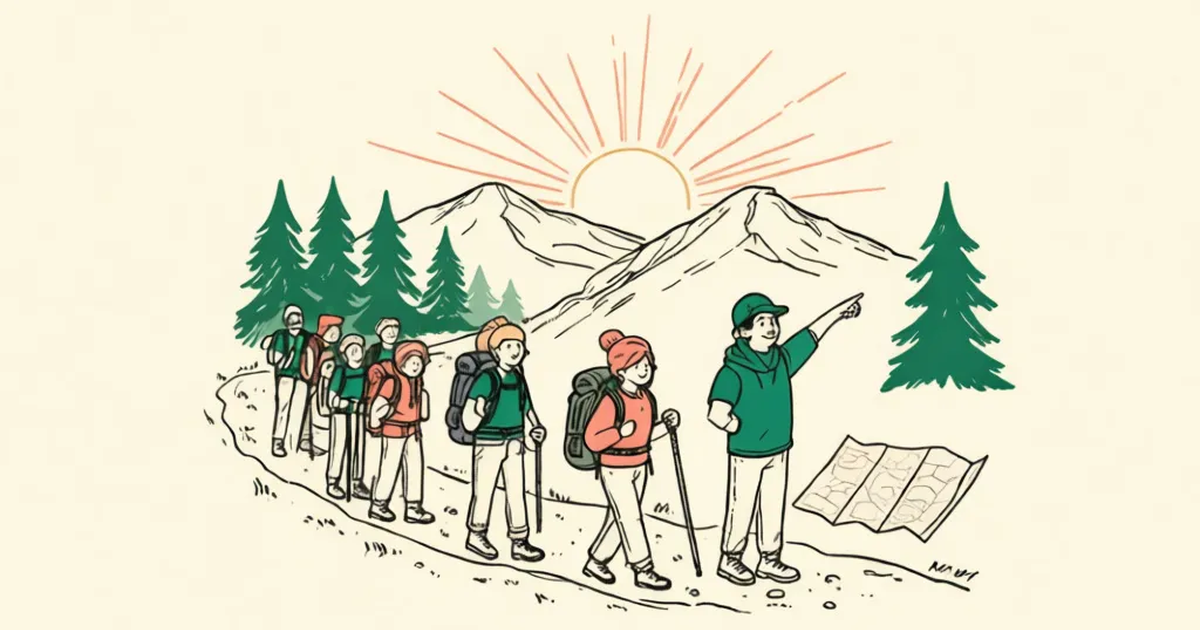
You cannot simply show up and lead a Sierra Club hike. Depending on the chapter and the kind of trip, a prospective leader completes the Club's outings leader training, holds current first-aid and CPR certification, and then leads at least one outing provisionally, mentored by an experienced leader who writes an evaluation afterward. Only then does a chapter outings chair certify them. It is a lot of process for a walk in the woods, and it is the clearest clue to what the Sierra Club actually is.
An apprenticeship for a walk in the woods
The requirements scale with the terrain. For front-country outings — conditioning hikes, neighborhood walks, trash cleanups, car camps — chapters ask leaders to be current in basic first aid. For trips that go further from a road, the bar rises to wilderness first aid or higher. Chapters publish their own rating systems and steps to leadership: the Angeles Chapter maintains detailed rating requirements, and the San Francisco Bay Chapter runs its own path for people who want to start leading.
Nobody is paid for any of it. The people who research, plan and budget these trips — national ones sometimes a year or more in advance — are volunteers who took the training on their own time, and who go out as trainees under a mentor before they are trusted with a group.
It began as a club for going outside
The Sierra Club was founded on May 28, 1892, in San Francisco. The naturalist John Muir became its first president, alongside founders including the botanist Willis Linn Jepson and the lawyer Warren Olney, whose office hosted the first meeting. It was modeled on the Appalachian Mountain Club back east, and its original purpose was concrete: get people into the mountain country of the Pacific Coast, publish reliable information about it, and enlist the public and the government in protecting it.
The first Club excursion went out in 1901, to Yosemite Valley, organized by William Colby. The annual High Trips that followed sometimes carried more than a hundred participants and crew, and were led over the decades by figures including Ansel Adams and David Brower. The political work grew out of the trips rather than the other way around — the fight over Hetch Hetchy, the Echo Park dam battle of the 1950s, the campaign against dams proposed in the Grand Canyon, and the passage of the Wilderness Act in 1964.
Sixty-four chapters that elect their own leaders
The Club is organized into 64 chapters and roughly 446 local groups. What makes that unusual among large environmental nonprofits is that members vote. Chapter executive committees are elected by the members of that chapter by written ballot, and members can recall them. Nationally, five of the fifteen board directors are elected each year by the full membership to three-year terms, and the board elects its own president from among them.
These are real dates on a calendar, not a formality. Angeles Chapter members, for instance, vote from October 1 to November 13, 2026, for both their chapter executive committee and the committees of thirteen regional groups.
What a year of outings adds up to
The Club's program reporting gives a sense of the volume behind all that training:
- About 4,769 outings organized by local chapters, with roughly 21,000 participants
- 78 domestic and 34 international trips, taking 1,274 people out
- 226 Inspiring Connections Outdoors trips for 4,265 youth and adults
Sierra, the Club's quarterly magazine, prints more than 355,000 copies per issue. Its most recent full year of IRS filings shows roughly $169 million in revenue against about $172 million in expenses, with close to 90 percent of that revenue coming from contributions.
The 1971 trip that turned into a national program
Inspiring Connections Outdoors began in San Francisco in 1971, when a handful of Sierra Club outings leaders decided to take a group of city kids backpacking. The Club formally recognized the effort in 1974. It spread to some 50 chapters around the country and took its current name in 2014, and nationally it now reaches over 14,000 participants a year.
It stays deliberately small and local. The San Francisco Bay group runs on about 45 active volunteers, ranging in age from 20 to 70, who lead 25 to 30 trips a year and log between 800 and 1,000 youth-days — one young person, one day outdoors. Leaders are trained and certified in outdoor recreation and wilderness first aid, and the group provides transport and equipment so that cost is not the reason a kid stays home.

Before you give, check which Sierra Club you are giving to
This one catches people out. The Sierra Club itself is a 501(c)(4) social welfare organization, tax-exempt since 1968 — which is what allows it to lobby and campaign, but also means gifts to it are not tax-deductible. The Sierra Club Foundation is a legally separate 501(c)(3), with its own board and its own books, and donations there are deductible; it passes charitable grants to the Club. Both accept gifts through their own websites. If you would rather your money stayed close to home, chapters take donations directly and keep every dollar in their region, whereas most national membership dues fund national work. Chapters also list volunteer roles — outings leadership, conservation committees, local advocacy — on sierraclub.org, and Member Care answers questions at member.care@sierraclub.org.
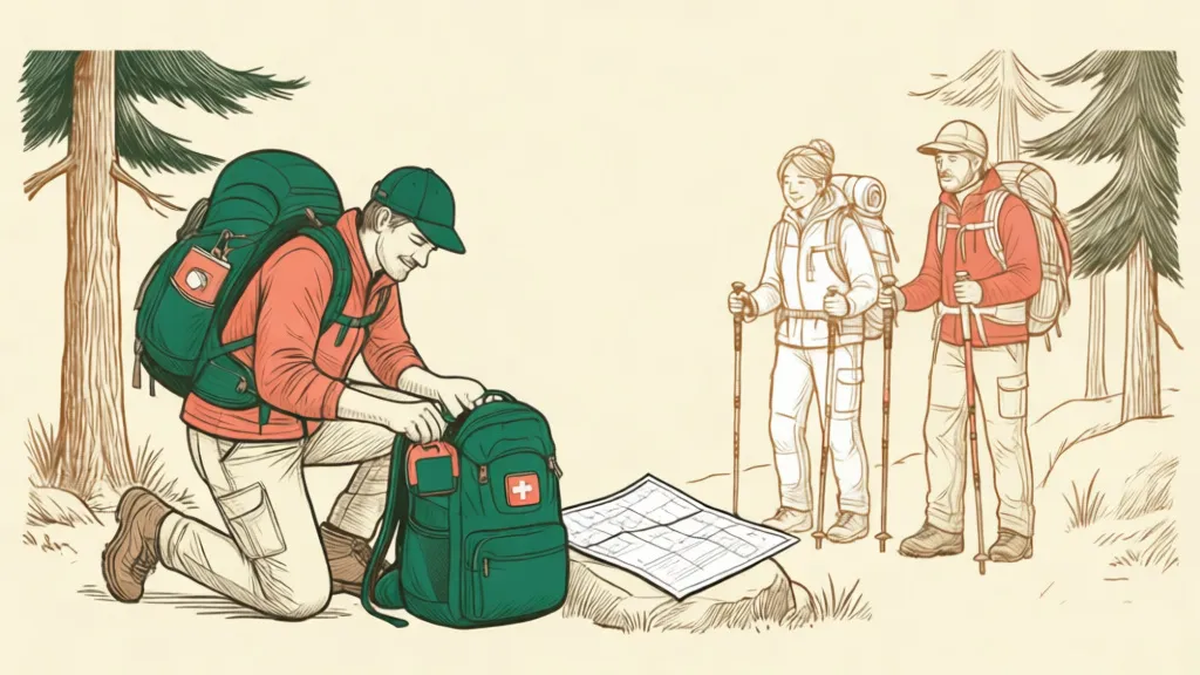
Strip away the scale and what is left is people doing unpaid work on their days off: the leader packing a first-aid kit, the committee member reading an agenda, the volunteer driving a van full of teenagers to a trailhead. Pennygood was built for exactly that kind of person — a place where someone quietly doing good can receive small, steady support from the people who notice. The Sierra Club is not on Pennygood and this is not a way to donate to it. But if you are the one keeping something like this going in your own community, you can start a page at pennygood.me.