Community
The Nature Conservancy Had Seven Days and $7,500. It Bought the Forest.
A rushed 1955 land deal in Bedford, New York set the method The Nature Conservancy still uses — now applied to the debts of whole countries.
By The Pennygood team · Aug 2026 · 5 min read

On Christmas Eve 1954, a landowner outside Bedford, New York told a small committee of neighbors that a developer had put an offer on his land. They had seven days to match it.
Seven days, and three life insurance policies
The land in question was a 60-acre stretch of old-growth hemlock in the Mianus River Gorge. The committee trying to save it had formed around Gloria Hollister, a scientist and explorer, and her husband Tony Anable. The parcel was priced at $30,000, which the neighbors did not have. Three of them pledged their own life insurance policies to secure a $10,000 downpayment, and it still was not enough.
The organization that closed the gap was three years old at the time. The Nature Conservancy had been incorporated in the District of Columbia in 1951, and it put in $7,500 — not as a gift, but as a loan that had to be repaid. The purchase went through in 1955. It was the first land TNC ever bought.
The condition that turned into a method
That repayment clause is the part worth noticing. Money that comes back can be spent again, and TNC's own account of the deal credits it with creating the group's first revolving land protection fund — a pot that could be emptied for an urgent parcel and refilled in time for the next one. The Mianus River Gorge went on to become the country's first registered National Natural Landmark, and is cared for today in partnership with the Mianus River Gorge land trust, which manages the site.
The habit of doing conservation through paperwork rather than protest shows up all through the early record:
- 1915–1946: the group's roots run back through the Ecological Society of America and Victor Shelford's committee on preserving natural areas for study, to the Ecologists Union, which in 1946 resolved to take direct action to save threatened land.
- 1954: the first chapter is chartered, in eastern New York.
- 1961: the first conservation easement — six acres in Connecticut — protecting land without owning it.
- 1962: the first prescribed burn, in Minnesota.
- 1976: more than a million acres preserved since founding.
The same instinct, now aimed at sovereign debt
Seventy years after the hemlock forest, TNC's most unusual program is still fundamentally a financing trick. Nature Bonds helps a country refinance its sovereign debt on better terms; the savings are then committed to conservation and climate work. It was piloted in the Seychelles in 2016 under the name Blue Bonds for Ocean Conservation, and was renamed as it expanded past the coastline to land and fresh water.
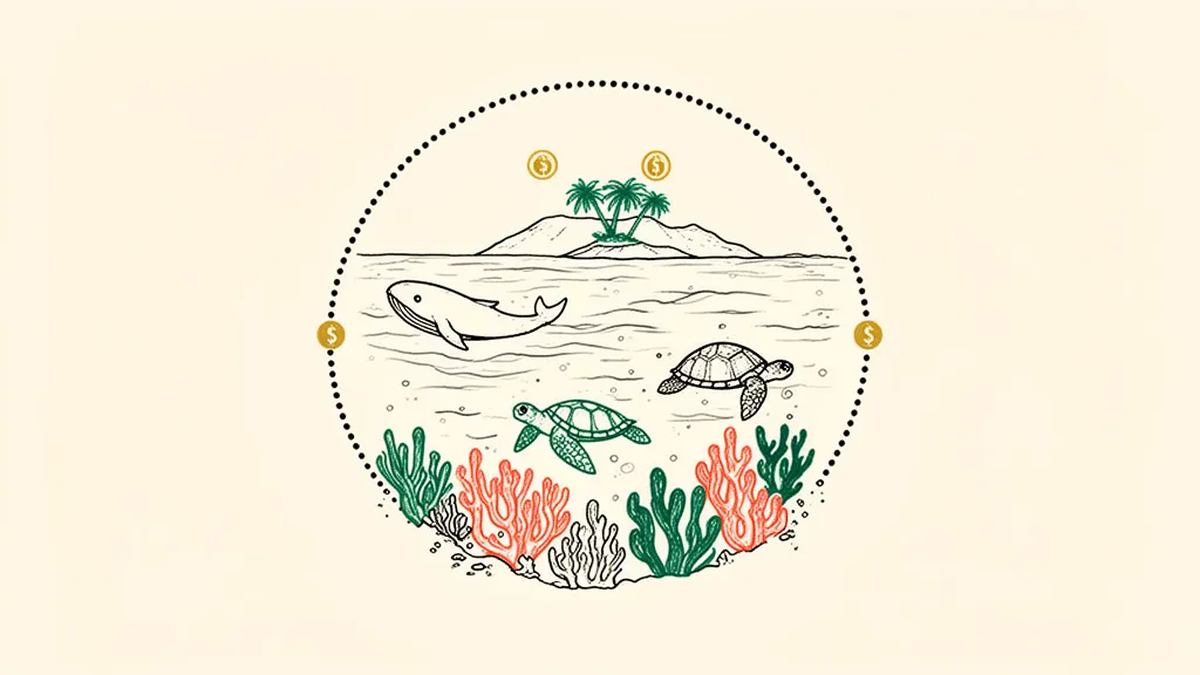
Six projects are in implementation — the Seychelles, Belize, Barbados, Gabon, The Bahamas and Ecuador — and together they are expected to unlock roughly $1 billion. The commitments attached cover more than 242 million hectares of ocean, land and fresh water, plus 18,000 kilometers of rivers. It is the 1955 deal at a different scale: a financial instrument doing work that a fence cannot.
What it looks like on a Tuesday in Illinois
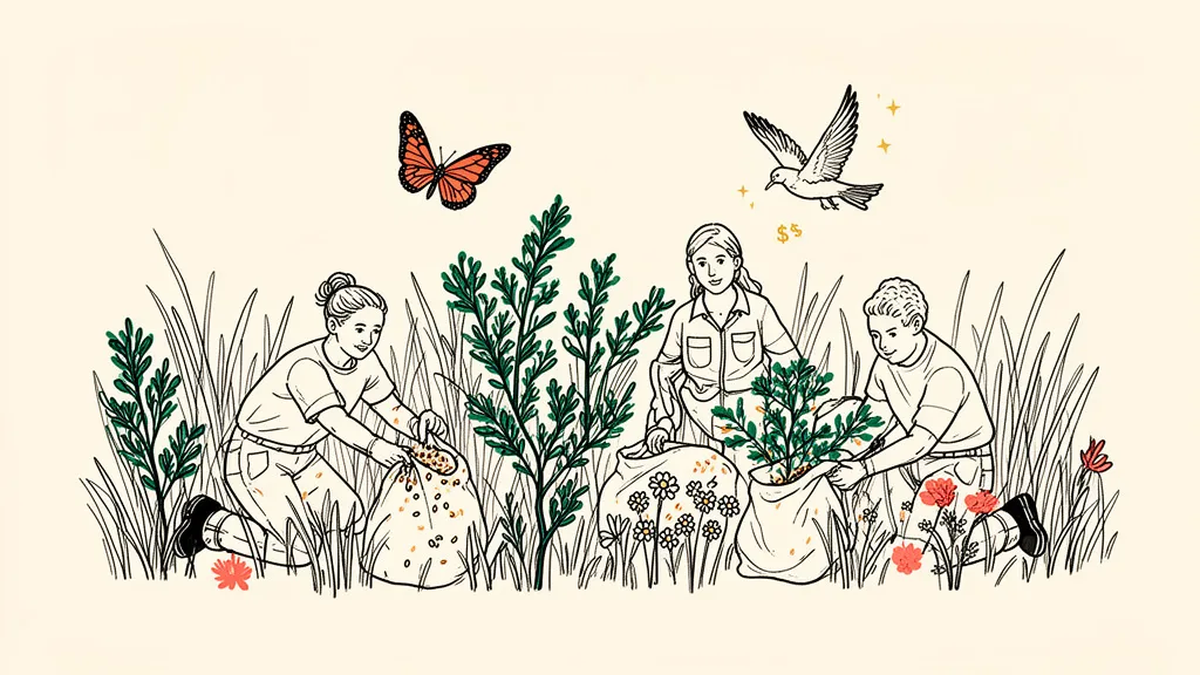
None of that is what most volunteers encounter. TNC runs volunteer programs in eighteen states, and the day-to-day list is unglamorous: planting seedlings, pulling invasive species, collecting seed, counting birds, logging data, leading tours.
Illinois has the longest-running version of this. The Volunteer Stewardship Network has worked with the Illinois Nature Preserves Commission for more than forty years and supports over 140 groups, at TNC sites including Nachusa Grasslands and Kankakee Sands as well as land the organization does not own. The pitch is deliberately low-barrier — individuals, families or groups — and you can search by zip code or write to vsn@tnc.org.
How big it got, and how to give
TNC now works in 83 countries and territories — 39 directly, 44 through partners — with more than a million members and over a thousand scientists on staff. It reports having protected more than 125 million acres of land and running more than 100 marine conservation projects. Its 2025 annual report notes support and revenue passing $2 billion for the first time, more than $10 billion in total assets, and 75.4% of the budget going to conservation programs. Charity Navigator currently gives it four stars at 97%; TNC's own accountability page also cites a B+ from CharityWatch.
If you want to help, go through TNC's own channels at nature.org, which offers one-time gifts, monthly giving, membership and estate planning, alongside the volunteer pages and local state offices. There is no reason to route a donation through anyone else.
Big conservation runs on payroll, lawyers and bond markets — but a lot of the actual work gets done by people nobody pays: the person who shows up with loppers on a Saturday, the one who counts the same stretch of river every spring. Pennygood is built for that second group. It's a place where individuals doing good in their own communities can receive small monthly support, a few dollars at a time. The Nature Conservancy isn't on it and doesn't need to be — but if you're the one organizing the cleanup, you can start a page at pennygood.me.