Community
The Salvation Army: How a Sailor's Memory Became America's Red Kettle
From an iron pot at an Oakland ferry landing in 1891 to nearly 28 million people helped a year — the long reach of The Salvation Army.
By The Pennygood team · Jun 2026 · 3 min read

In 1891 a Salvation Army captain in San Francisco, Joseph McFee, had a problem he couldn't pay for: he wanted to serve free Christmas dinners to the city's poor and had no money to do it. He remembered an iron pot he'd seen on the Liverpool docks years earlier, where sailors dropped coins for the needy. So he set a similar kettle at the Oakland Ferry Landing, at the foot of Market Street, where everyone heading to the boats would pass it.
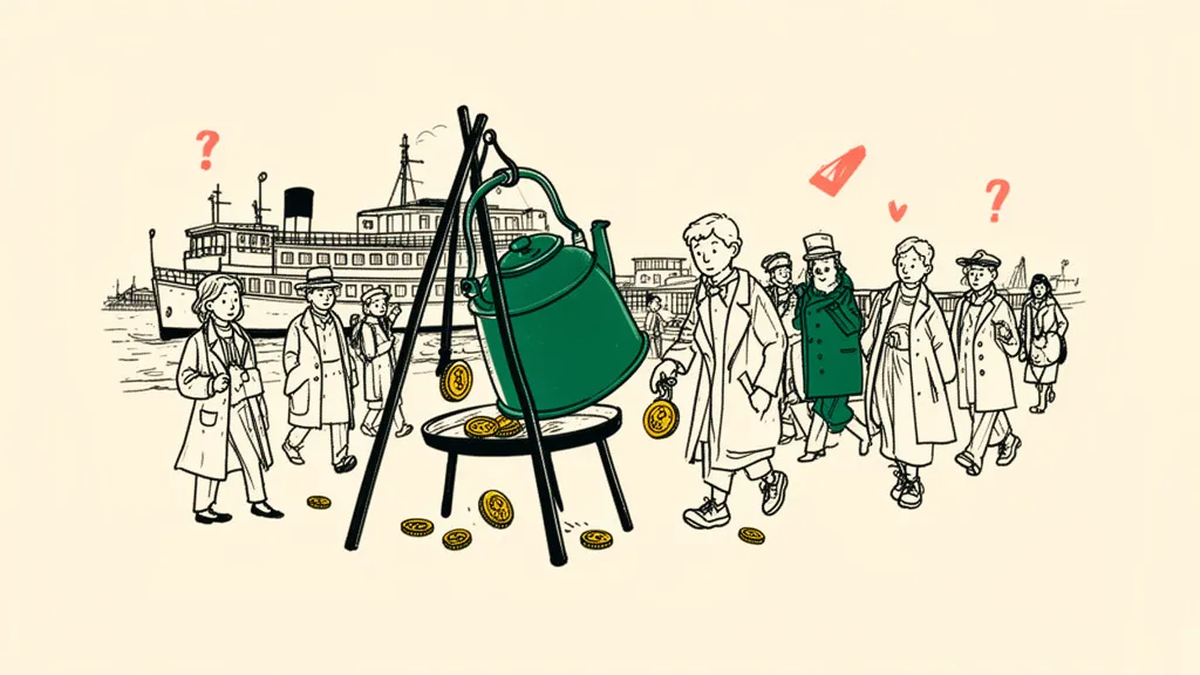
It worked. By 1897 the idea had spread east, and that year kettle collections in Boston and other cities paid for 150,000 Christmas dinners. The red kettle and its bell have rung every December since — one of the most recognizable charity images in the country.
A movement that started in a London slum
The Salvation Army wasn't born in America. William Booth, a former Methodist minister, began preaching to the poor of London's East End in 1865. In 1878, reviewing a report that described his group as a "volunteer army," he crossed out "volunteer" and wrote "Salvation" in its place. The name stuck.
The work crossed the Atlantic on March 10, 1880, when Commissioner George Scott Railton and seven women known as the "Hallelujah Lassies" launched it in the United States. Today the organization runs more than 7,400 centers of operation and describes itself as present in every zip code in the country.
What the kettle pays for now
The coins are still small; the scale is not. In 2024 The Salvation Army reported helping nearly 28 million people across the U.S. and serving close to 167 million meals.
Beyond food, it provides rent and utility assistance, clothing, help with transportation and medical costs, and safe shelter for people facing homelessness or escaping unsafe situations — the kind of breadth that makes it one of the largest social service providers in the country. Its disaster teams also deploy after hurricanes, floods, and fires, with recent operations including long-term relief in Jamaica after Hurricane Melissa.
The thrift store that funds a recovery
One of its quieter programs runs almost entirely on donated things. The Salvation Army's Adult Rehabilitation Centers offer months-long residential recovery from addiction at no cost to the people in them — and they're paid for by the Family Stores, the thrift shops stocked with the couches, coats, and dishes that people drop off. In St. Louis, roughly 80 percent of one center's budget comes from thrift sales.
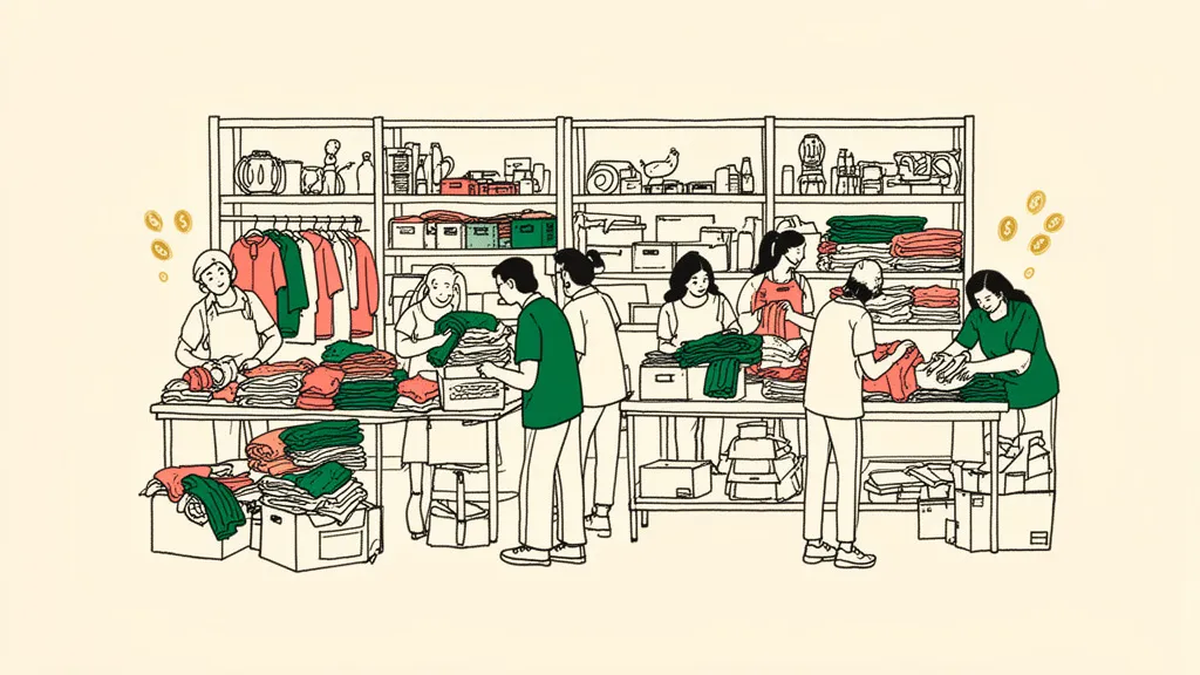
Residents live on site, take part in work therapy and counseling, and slowly rebuild routine and responsibility. The chain that runs from a bag of old clothes to a sorted shelf to a person's recovery is, in a way, the whole organization in miniature.
How to support the work
The Salvation Army takes support directly: through the familiar red kettles each December, through pickups of used goods for its stores, and year-round at salvationarmyusa.org. Local centers also welcome volunteers to ring bells, sort donations, and serve meals.
An organization this large still runs on individuals — the bell-ringer standing in the cold, the volunteer folding donated sweaters. Pennygood is a platform built for exactly those people: a way for a community to give someone who quietly does good a little steady support, a few dollars a month. If that brings someone to mind, they can start a page at pennygood.me.