Basics
Why a Card Is Not Enough: How Pennygood Solves What Bank Details Can't
One-time transfer from people who know you, or regular support from anyone in the world — here's the difference.
By The Pennygood team · Jun 2026 · 5 min read
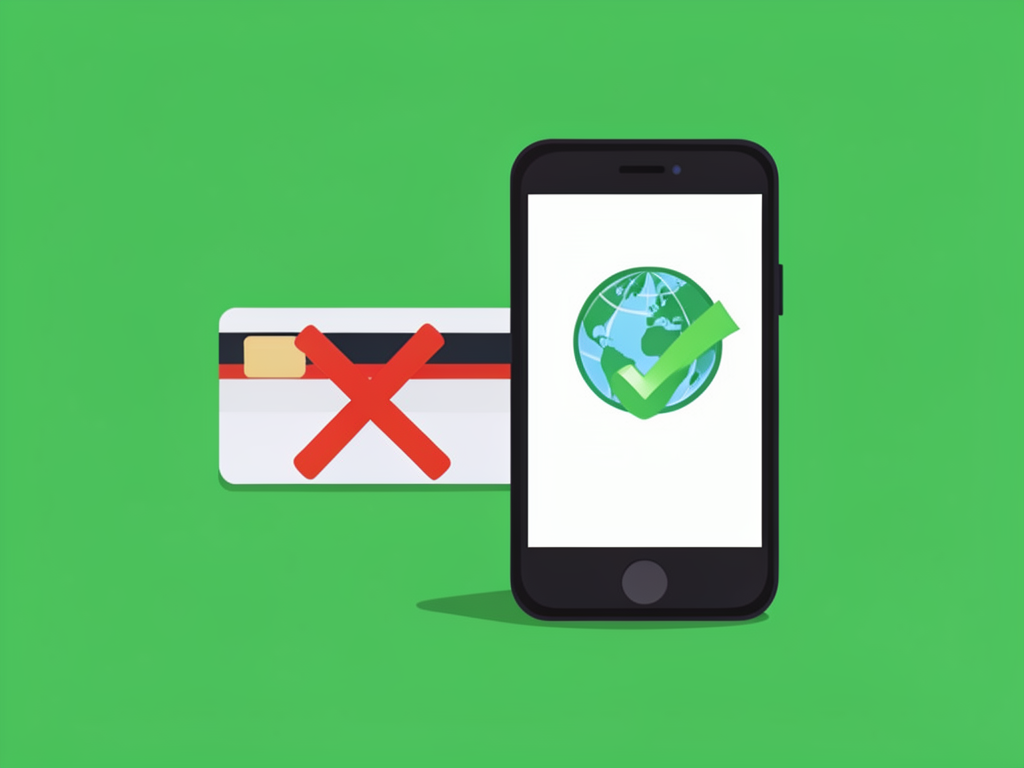
Sharing your card number or bank details — you can do that. It works for one scenario: someone who already knows you wants to make a one-time transfer and doesn't mind. That's it. For that, Pennygood isn't necessary.
If you build your product around this scenario, you'll lose. Because free vs 8% is an obvious choice. But reality is more complicated, and here's why.
Recurrence — the one thing a card can't provide
Card = one-time transfer. Pennygood = subscription. This isn't a nuance — it's a fundamental difference in model.
With bank details, someone donates once and forgets. $3 one time is a gesture, not help. $3 every month is stable, predictable income that allows planning.
Nobody will manually transfer $3 twelve times a year. People are busy. Automating recurring support is physically impossible with bank details. You either get a subscription, or you get a one-time transfer and hope it repeats.
Global reach — cards work within one country
Bank details are tied to one country. A Russian card works only in Russia. A Spanish IBAN only in the eurozone. Someone from Brazil or Mexico can't just transfer to a Russian card — fees, SWIFT, days of waiting, bureaucracy.
Pennygood: any card in the world → euros to the volunteer's account, in one tap. You scale abroad without a single extra step on the volunteer's side. A card doesn't scale; you do.
Trust between strangers
Here is the subtle and important part. Sending your card number to a stranger online is a psychological barrier for both sides.
A volunteer doesn't feel comfortable publishing their bank details. This exposes their account to everyone — and not everyone who writes "donate" deserves that access.
A supporter is afraid to transfer to an unknown account. "What if it's a scam? What if it's fraud?" A bare string of bank details gives no guarantee.
Pennygood is a trusted intermediary. The volunteer doesn't expose their details. The supporter pays through a familiar Stripe flow, like any online store. You're selling transaction security between strangers. That's something a card fundamentally cannot provide.
Identity and presentation
Bank details are a bare account number. For example: IBAN ES91 0049... Nothing about the person, nothing about what they do, nothing about how many people already support them.
Pennygood is a page. Who you are, what you do, how many people already said "I believe in this." Social proof — that's what converts a stranger into a supporter. "28 people already back this" is stronger than any call to action.
pennygood.me/anna vs "Transfer to card 4279..." The first is a story. The second is an account number. For a stranger deciding whether to support, the difference is massive.
Discoverability — a card can't be found
Bank details in a bio are passive. You have to know them already. A person either already knows your number, or they don't. You don't attract new people.
A Pennygood page is indexed. People find it through the Feed, search, AI agents. The platform brings you supporters you don't even know. A card is passive — the platform is active.
One answer to "why Pennygood if I have a card?"
You can share your card — but that's a one-time transfer from people who already know you. Pennygood is regular support, from anyone in the world, without exposing your bank details, on a page people find on their own.
When a card really is enough — and that's fine
Honestly: if you have a loyal audience in one country and people just ask you to share your details for occasional transfers — Pennygood may be overkill. That's not a product flaw, it's just a different scenario.
Your value is strongest where it matters: regularly, globally, safely. If a volunteer hears "people send me money from different countries" or "I want stable income, not once a year" — they're yours. If "a few locals sent me something a couple times" — a card is enough, and that's fine.
This is exactly the same reason Patreon and Ko-fi exist, even though everyone has PayPal. Recurrence, presentation, trust, and discovery — the things that are impossible with bare bank details.