Community
World Vision and the Well That Never Stops: Clean Water Every Ten Seconds
World Vision is the largest nongovernmental clean-water provider in the developing world. Here's how a $5 gift in 1950 grew into that.
By The Pennygood team · Jul 2026 · 3 min read
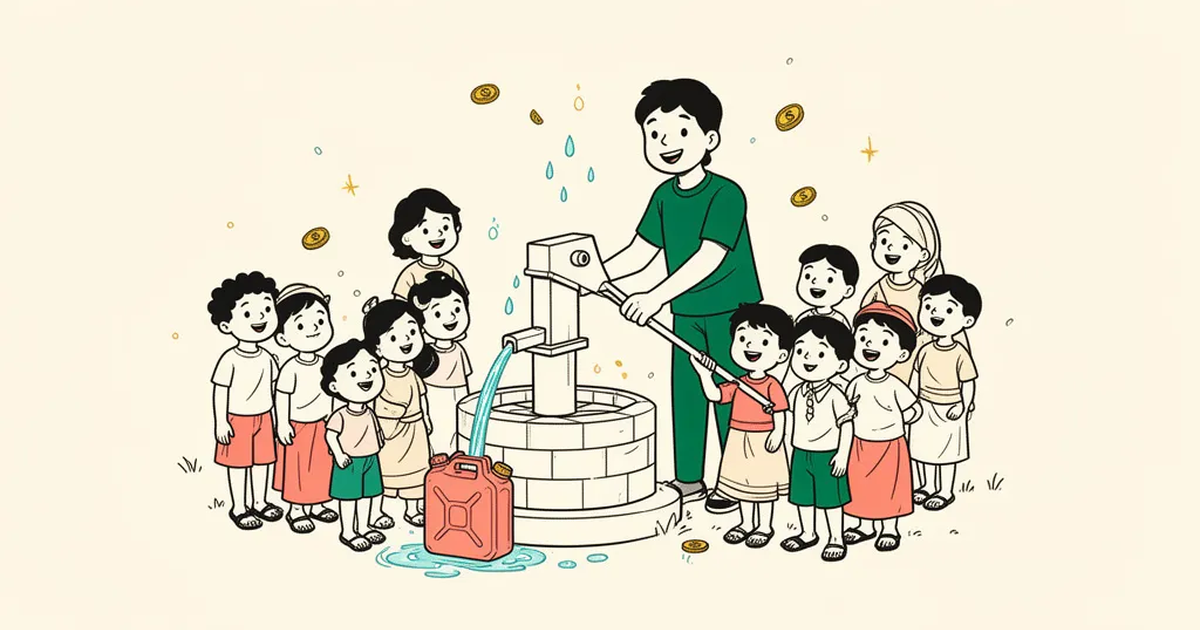
Somewhere in the world, in about the time it takes to read this sentence, one more person got clean water for the first time. World Vision reaches a new person with clean water roughly every ten seconds — the pace of the largest clean-water effort run by any nongovernmental group in the developing world.
A broken heart and a five-dollar bill
World Vision started with one man who couldn't look away. In the late 1940s, Bob Pierce, an American traveling in China, met an abandoned child and handed over the last five dollars in his pocket. He decided a single gift wasn't enough — that lasting help would take many more people involved.
In 1950 he founded World Vision, run at first out of Oregon, to respond to emergencies across East Asia. The line he left the organization still frames its work: let his heart be broken by the things that break the heart of God. Seven decades later it operates in nearly 100 countries, including the United States, as the largest Christian international relief and development organization.
Clean water, every ten seconds
Water is where World Vision now moves at the biggest scale. It describes itself as the world's leading nongovernmental provider of clean water in the developing world, and the figures behind that are specific. In 2023 alone, close to 3.1 million people gained lasting access to clean water, about 2.9 million got household handwashing facilities, and nearly 2.5 million reached sanitation they didn't have before.
The pace is deliberate. The organization has set a goal of reaching 50 million people with clean water by 2030 — everyone, everywhere it works — and has already passed the halfway mark. Wells and taps are only part of it; the work pairs water with sanitation and hygiene so the gains actually hold.
Water is the entry point, not the whole story
Clean water tends to be the first thing a community asks for, but it opens the door to the rest of World Vision's work: child sponsorship that links a donor to a specific child, emergency food for malnourished kids, medical aid, and long-term efforts to pull families out of extreme poverty. Between 2015 and 2022 the organization counted 70 million people reached with tools to lift themselves out of extreme poverty, and it has set a much larger target for 2030.
For anyone who wants to know where the money goes, World Vision reports that in 2025, 86 percent of its operating expenses went to programs, with the rest split between fundraising and management. It holds ratings from Charity Navigator, the Better Business Bureau, Candid, and CharityWatch.
How to help
World Vision takes support directly through worldvision.org. You can sponsor a child, give to its clean-water or disaster-response funds, or pick a specific item — like a share of a well — from its gift catalog.
Even an organization this size still comes down to individuals: the field staff, the volunteers, the people who show up where the water isn't. Pennygood is built for exactly those people — a place where a community can send small, steady monthly support to someone doing good, directly. World Vision isn't on Pennygood, and this isn't a way to donate to it. But if reading this brought to mind someone near you quietly doing this kind of work, they can start a page at pennygood.me.